Remembering Cyclone Seroja 2021: Retrofitting for Resilient Housing and Buildings to Withstand Tropical Cyclones in Indonesia
Exactly three years ago—around 3 to 5 April 2021—the Indonesian mainland was hit by Tropical Cyclone (TC) Seroja, one of the rare extreme storm events in low-latitude oceans. Tropical cyclones are non-frontal low-pressure systems that arise in warm tropical seas at latitudes of 10°-20° (Sunarti, 2018). Unlike tornadoes that form on land and whose vortices can reach hundreds of metres, tropical cyclones can be up to hundreds of kilometres in diameter (BMKG, 2015). This makes their impacts much larger and macro-scale. Although many cyclones have historically formed to the north and south of Indonesia since the 1970s, TC Seroja category 1 (Australian scale) is said to be unusual because the system formed near the equator (Sawu Sea) hitting land in Kupang, East Nusa Tenggara (Nusa Tenggara Timur/NTT) and began to develop strongly until it turned into a category 3 when it turned to Australia and weakened in the southwest (BOM AU, 2023; Kurniawan, 2021; Syaifullah, 2015). These weather anomalies may be triggered by climate change, which increases the risk of changes in tropical cyclone frequency and intensity (Bhatia et al., 2018; Knutson et al., 2021).
 (a) (b) (c)
 (a) (b)
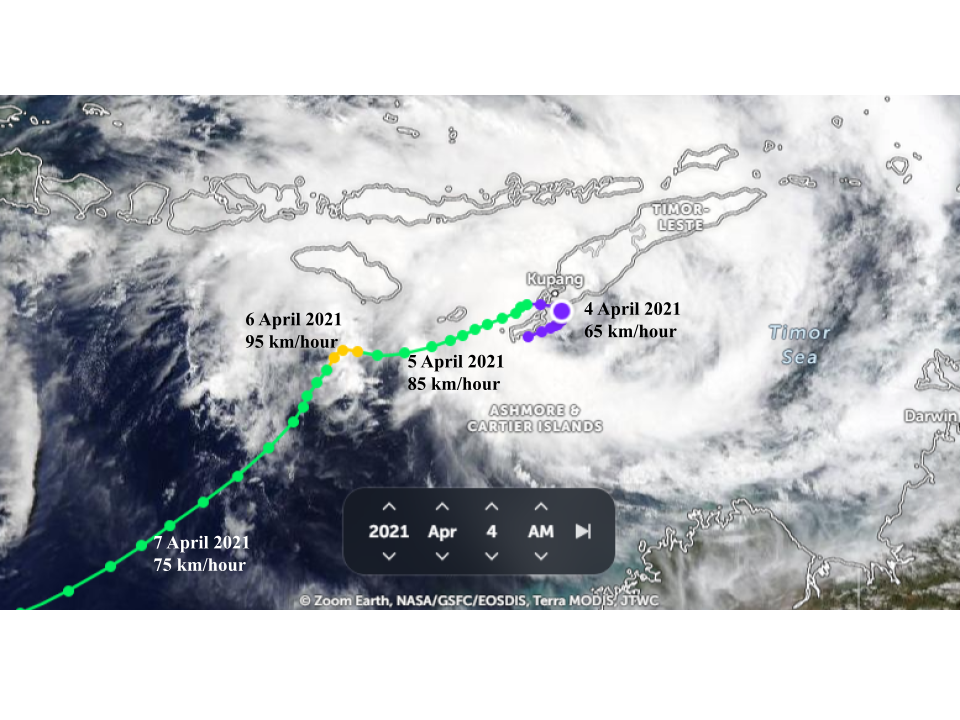 Figure 1. Cyclone Seroja Track 3-7 April 2021
Source: Zoom Earth (2021)
Figure 1. Cyclone Seroja Track 3-7 April 2021
Source: Zoom Earth (2021)
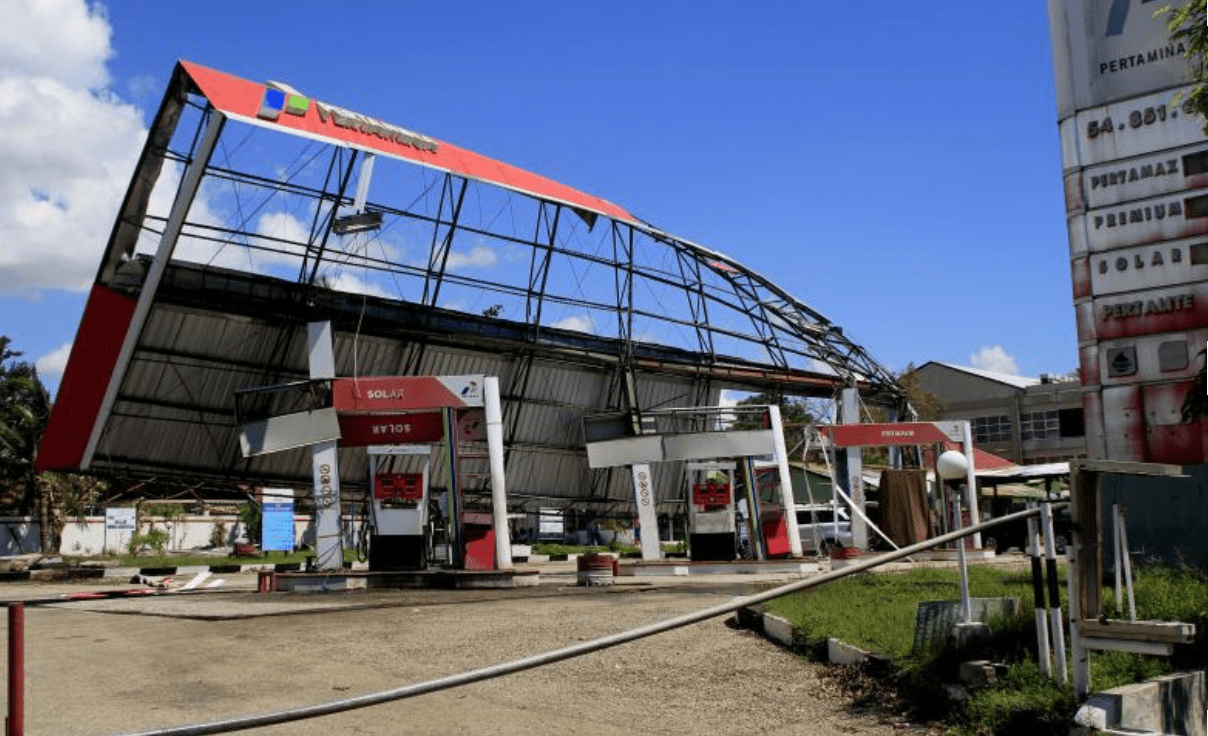
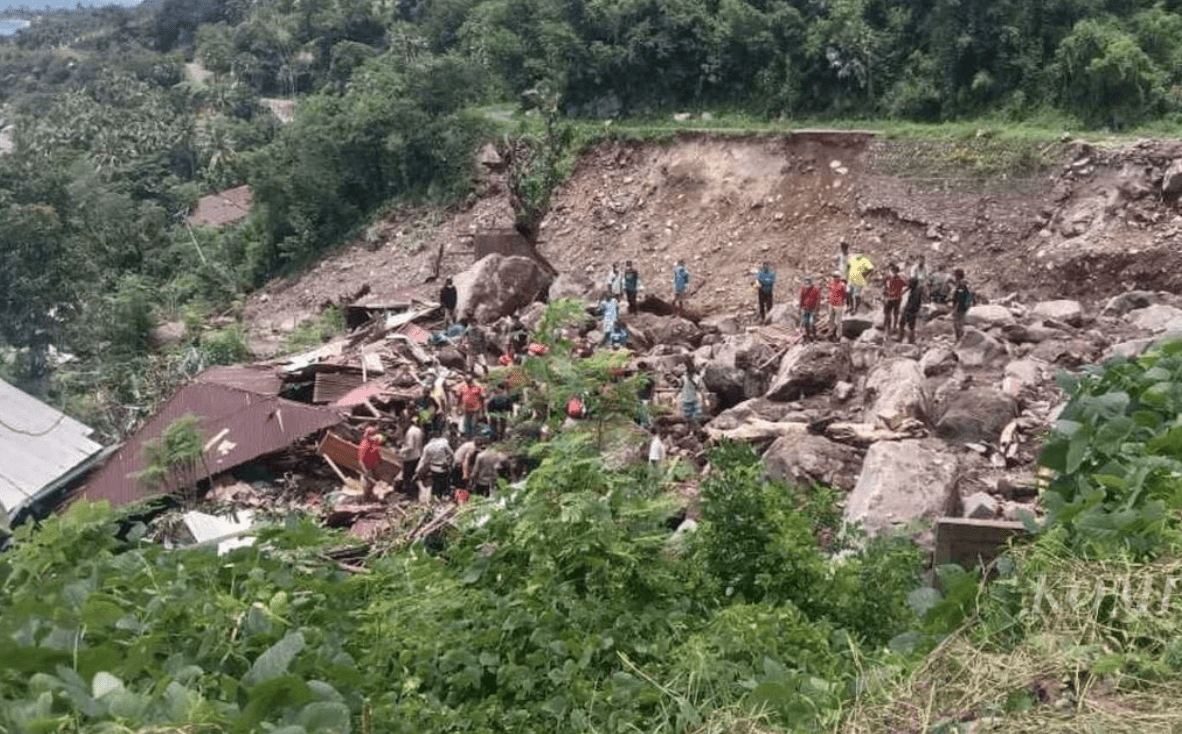
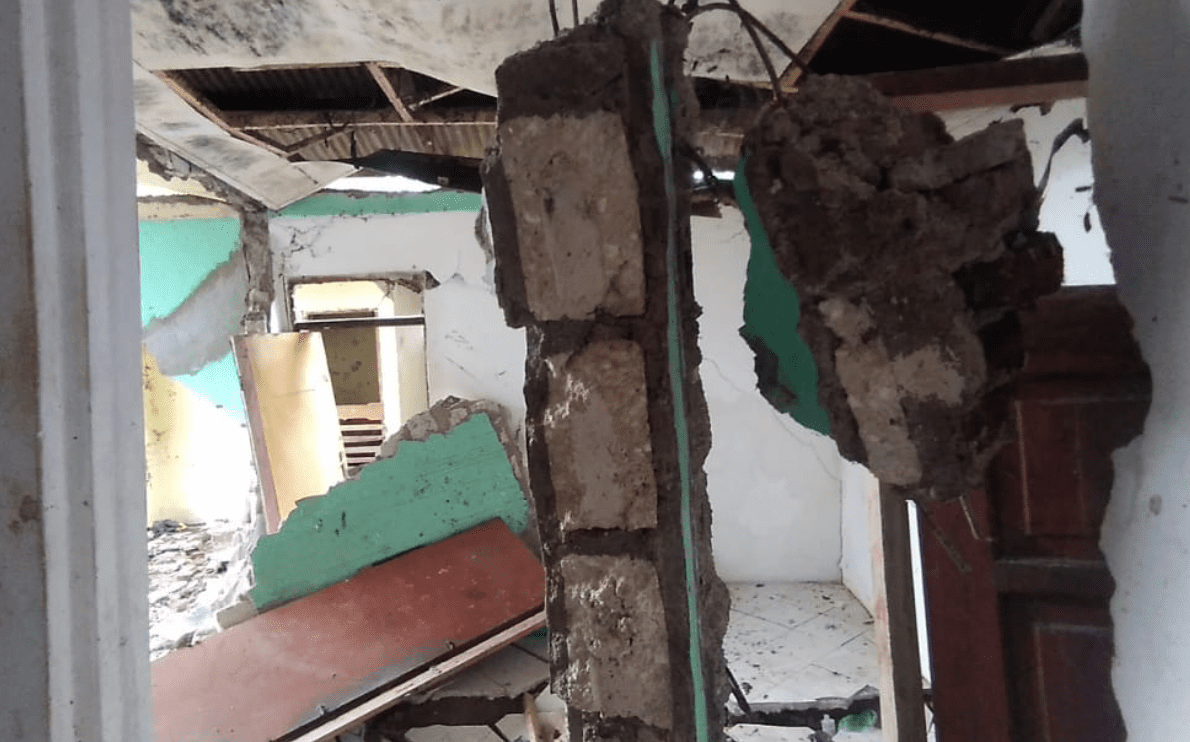
(a) (b) (c)
Figure 2. Impacts of Strong Winds (a), Flash Floods (b), and Landslides from TC Seroja (c) Source: (a) & (b) tempo.co & kompas.id (2021); (c) Author's Observations (2023)
Policy instruments, regulations, and standards for housing and buildings that are robust to the massive impacts of tropical cyclones are urgent to enforce. Several existing regulations, such as Law No. 1 of 2011 on Housing and Settlement Areas, Presidential Regulation No. 18 of 2020 on the National Medium-Term Development Plan (Rencana Pembangunan Jangka Menengah Nasional/RPJMN) 2020-2024, and Minister of Public Works and Housing Regulation No. 29 of 2018 on Technical Standards for Minimum Service Standards for Public Works and Housing, demonstrate a focus on livable housing for community well-being. Although existing policy directions have begun to address the importance of setting housing and building standards with disaster-resilient principles (Tran, 2016; Wilson & Lazarus, 2020), consideration of tropical cyclone resilience in the field is still very limited. Building codes, such as SNI 1727:2013, still adopt ASCE 7-10 (US standard) and have not been adapted to the standards in Southeast Asia and beyond, so some of the information in the SNI is vague. Ultimately, HB 212-2002 was used as a reference, which only regulates up to tropical cyclone intensity scale category 1 (Yuanita, 2023). SNI 1727:2013 was later revised with SNI 1727:2020, which more clearly and in detail regulates the loading of buildings up to wind speed level IV (185 km/h or around tropical cyclone intensity scale category 3) (Lassa, 2021; Simanta, 2020). However, it still takes a long time to achieve resilience because it is still difficult to achieve livable houses and implement the previous SNI evenly due to economic, social, and various other considerations that can affect it in society (Yuanita, 2023).
(a) (b)
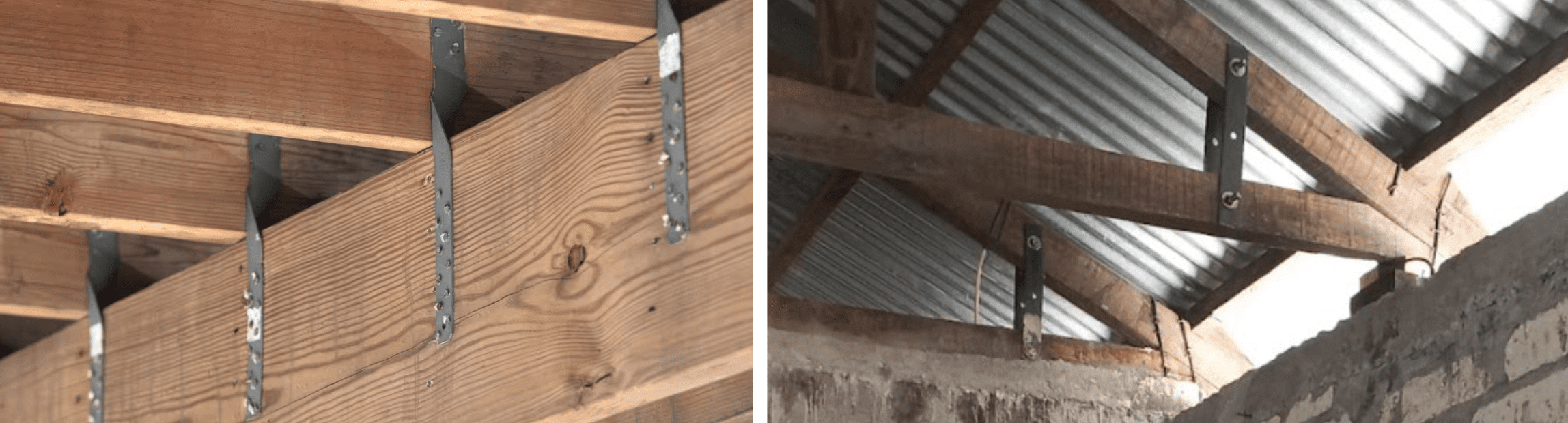
Figure 3. Example of Cyclone Strap for Retrofit (a) and Example of Strap Installation for Roofing in One of the Post-Cyclone Seroja Houses in Kupang, Indonesia (b) Source: (a) Brunnette (2023); (b)Author’s Observations (2023)
Retrofitting techniques that combine global best practices with local considerations can significantly improve structures' ability to withstand cyclonic winds and associated hazards. Retrofitting entails improving existing buildings' performance, safety, and resilience in accordance with current standards or specific requirements (Raju, 2017). A critical component of retrofitting is ensuring a strong connection between the roof and the rest of the structure. Installing hurricane or cyclone straps helps secure the roof during high winds and reduces the risk of it being torn off. Strengthening connections between various components, such as roofing with rafters, rafters with beams, beams with purlins, and columns with beams and tie beams, contributes to the building's structural integrity (Rafael and Hendrikus, 2021). Furthermore, using techniques like chicken claw foundations improves stability not only against wind but also against other hazards such as floods, landslides, and soil movement. Beyond structural improvements, implementing additional preparedness measures is critical. Weigh down the roof with heavy-duty items like tires or sandbags to prevent strong winds from lifting it. Keeping heavy or hazardous objects away from buildings lowers the risk of damage or injury during cyclones. Furthermore, keeping a safe distance between trees and structures keeps them from falling on buildings during storms. The impacts of TC Seroja emphasise the urgent need for robust policies, regulations, and standards to strengthen Indonesia's infrastructure against tropical cyclones. While existing regulations have made strides in addressing disaster resilience, a more concentrated effort on tropical cyclone resilience is warranted. Retrofit strategies offer promising avenues for enhancing structural resilience to cyclonic winds and associated risks. The effectiveness of retrofitting strategies hinges on strong collaboration between the government and various stakeholders. This partnership is pivotal in ensuring that retrofitting efforts align with local requirements. Moreover, the economic capacity of the community is a key factor in ensuring equitable access to resilient housing solutions and infrastructure. By implementing comprehensive measures and fostering collaboration, Indonesia can fortify its readiness and mitigate the impacts of future tropical cyclones. References:- Ama, K. K. (2021, May 3). Rumah Rusak Terdampak Badai Seroja di NTT Mencapai 52.793 Unit. Kompas. https://www.kompas.id/baca/nusantara/2021/05/03/17-kabupaten-kota-di-ntt-merampungkan-data-kerusakan-rumah-warga-akibat-badai-seroja
- Bhatia, K., Vecchi, G., Murakami, H., Underwood, S., & Kossin, J. (2018). Projected response of tropical cyclone intensity and intensification in a global climate model. Journal of Climate, 31(20), 8281–8303. https://doi.org/10.1175/JCLI-D-17-0898.1
- BMKG. (2015). Perbedaan antara Siklon, Tornado, Puting Beliung, dan Water Spout. https://web.meteo.bmkg.go.id/id/component/content/article/37-siklon-tropis/271-perbedaan-antara-siklon-tornado-puting-beliung-water-spout
- BOM AU. (2023). Tropical cyclone reports. http://www.bom.gov.au/cyclone/tropicalcyclone-knowledge-centre/history/past-tropical-cyclones/
- Brunnette, L. (2023, August 9). How to install Hurricane Ties in 4 steps. angi.com. https://www.angi.com/articles/how-to-install-hurricane-ties.htm
- Knutson, T. R., Sirutis, J. J., Zhao, M., Tuleya, R. E., Bender, M., Vecchi, G. A., Villarini, G., & Chavas, D. (2015). Global projections of intense tropical cyclone activity for the late twenty-first century from dynamical downscaling of CMIP5/RCP4.5 scenarios. Journal of Climate, 28(18), 7203–7224. https://doi.org/10.1175/JCLI-D-15-0129.1
- Kurniawan, R., Harsa, H., Nurrahmat, M. H., Sasmito, A., Florida, N., Makmur, E. E. S., Swarinoto, Y. S., Habibie, M. N., Hutapea, T. F., Hendri, Sudewi, R. S., Fitria, W., Praja, A. S., & Adrianita, F. (2021). The Impact of Tropical Cyclone Seroja to the Rainfall and Sea Wave Height in East Nusa Tenggara. IOP Conference Series: Earth and Environmental Science, 925(1). https://doi.org/10.1088/1755- 1315/925/1/012049
- Lassa, J. A. (2021, April 9). Siklon tropis Seroja mungkin akan hantam Indonesia tiap tahun, tapi belum dimasukkan kluster bencana. THE CONVERSATION.
- Merdeka.com (2021). Total Korban Jiwa akibat Siklon Tropis di NTT Jadi 182 Orang. https://www.merdeka.com/peristiwa/total-korban-jiwa-akibat-siklon-tropis-di-ntt-jadi-182-orang.html
- Rafael, J. W. M., Hendrikus, R. (2021). Rumah Regel ditengah Badai Seroja - Analisa Pola Kerusakan & Konsep Retrofitting. Seminar Nasional Dampak Siklon Seroja pada Bangunan dan Infrastruktur Nusa Tenggara Timur.
- Raju, P. M. (2017). Retrofitting of Reinforced Concrete structural elements - Recent Technologies and Future Scope. https://www.researchgate.net/publication/322483740_Retrofitting_of_Reinforced_Concrete_structural_elements_-_Recent_Technologies_and_Future_Scope#:~:text=Retrofitting%20is%20the%20Science%20and,rehabilitation%20(or)%20strengthening%20terms.
- Simanta, D. (2020). Beban Minimum untuk Perancangan Bangunan Gedung dan Struktur lain (adopsi ASCE 7-16). https://spada.uns.ac.id/pluginfile.php/608864/mod_resource/content/1/Balitbang%2 0PU_sni-1727-2020-beban-minimum-untuk-perancangan-gedung-dan-strukturlain.pdf
- Sunarti, E., Gunawan, E., Widiyantoro, S., Marliyani, G. I., & Ida, R. (2021). Critical point on housing construction, resilience and family subjective welfare after disaster: Notes from the Lombok, Indonesia, earthquake sequence of July-August 2018. Geomatics, Natural Hazards and Risk, 12(1), 922–938. https://doi.org/10.1080/19475705.2021.1910576
- Syaifullah, D. R., & Sari, D. M. (2021). DEKOMPOSISI KETIMPANGAN PENDAPATAN DAN DETERMINAN POSISI EKONOMI. Jurnal Litbang Sukowati : Media Penelitian Dan Pengembangan, 5(1). https://doi.org/10.32630/sukowati.v5i1.262
- Tran, T. A. (2016). A Review of Contemporary Literature in the Field of DisasterResilient Housing. In Developing Disaster Resilient Housing in Vietnam: Challenges and Solutions. https://doi.org/10.1007/978-3-319-26743-2_2
- Wilson, A., & Lazarus, M. A. (2020). Resilient Design. In Sustainable Built Environments (pp. 143–159). Springer US. https://doi.org/10.1007/978-1-0716- 0684-1_1031
- Yuanita, C. N. (2023). Study Of Disaster Resilient Housing Policies and Its Implications On Housing Conditions Pre-Post Tropical Cyclone: Cyclone Seroja In Kupang City And Regency [Master’s thesis, Institut Teknologi Bandung]. Digilib ITB. https://digilib.itb.ac.id/gdl/view/75830
- Zoom Earth. (2021). Cyclone Seroja 2021. https://zoom.earth/storms/seroja2021/#map=satellite-hd
Written by:
-
Cecilia Nonifili Yuanita (DCR Deputy Program Officer)
-
Michael Hutahaean (Programme Officer)
-
William Harahap (RUP Research Officer)
Edited by:
-
Chelsea Patricia (Academic Officer)