Knowledge Exchange on ASEAN Loss and Damage & Comprehensive Risk Management Training
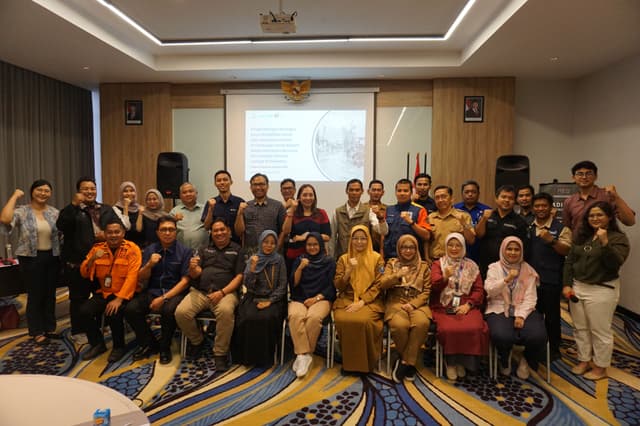
The “Knowledge Exchange on ASEAN Loss and Damage & Comprehensive Risk Management Training” was held as part of ASEAN Climate Week 2026 on 29 April to 1 May 2026, bringing together policymakers, researchers, and practitioners from across Southeast Asia. The event was hosted by The Department of Environment and Natural Resources (DENR) of The Philippines as ASEAN Chair 2026. It is supported by the European Union and Germany, in partnership with ASEAN, through the ASEAN-EU-German Climate Action Program (CAP), implemented by the Deutsche Gesellschaft für Internationale Zusammenarbeit (GIZ). Alongside the GIZ-CAP, Resilience Development Initiative (RDI) has conducted the Loss and Damage Study in Southeast Asia and supported to organize this knowledge exchange to strengthen regional understanding and capacity on addressing climate-related loss and damage. As climate impacts intensify across ASEAN, ranging from extreme weather events to slow-onset processes such as sea level rise and ecosystem degradation, the urgency to better understand, measure, and respond to loss and damage has become increasingly critical. This training served as a platform not only for knowledge exchange, but also for fostering collaboration toward more comprehensive and forward-looking climate risk management in the region.
 Opening Remarks from ASEAN Country Representative on Loss and Damage Initiative
On the first day, 29 April 2026, the program opened with remarks from Mr. Santhosh Manivannan, Director of Policy Division at the National Environment Agency Singapore and Chair of the ASEAN Working Group on Climate Change, followed by Usec. Analiza Rebuelta Teh, Undersecretary for Finance, Information Systems and Climate Change at the Department of Environment and Natural Resources Philippines, and Mr. Shameer Kanal, Cooperation Lead ASEAN at GIZ Indonesia and ASEAN. The session continued with a presentation on the Loss and Damage Study in Southeast Asia by P. Raja Siregar (Loss and Damage Study Expert team, RDI), which set the analytical foundation for the discussions. Country presentations from ASEAN Member States featured speakers including Ms. Sao Samphors from the Ministry of Environment of Cambodia, Ms. Sonekham Phommahaxay from the Ministry of Labour and Social Welfare Lao PDR, Ms. Analiza Rebuelta Teh from the Philippines, and Mr. Romchatr Ratisoontorn from Thailand’s Department of Climate Change and Environment. These presentations highlighted national progress, challenges, and approaches in utilizing climate data, risk mapping, and financing mechanisms. The day also included insights from Dr. Vong Sok of the ASEAN Secretariat and experts from RDI on how ASEAN can move toward a more systematic climate risk management approach. The afternoon sessions expanded the discussion through a panel on Ecosystem based Disaster Risk Reduction led by the Centre for Conservation Innovation of the Philippines and a session by IOM titled “Why Mobility Matters for Climate Risk Management,” which explored the intersection of climate risks, human mobility, and policy frameworks in ASEAN.
 Panel Session & Interactive Training with Researchers from Resilience Development Initiative on Understanding of Loss and Damage.
The second day, 30 April 2026, shifted into a more technical and interactive training format led by experts from RDI. The day began with an introduction to Loss and Damage by P. Raja Siregar (Loss and Damage Study Expert Team RDI), followed by a deep dive discussion session moderated by GIZ featuring contributions from Tiara Adysti (Research Officer RDI), Dekka Dhirgantara Putra (Programme Officer RDI), and Dr. Ayu Krishna Yuliawati (Research Fellow RDI). This session unpacked key regional risks, data and methodological gaps, slow-onset climate impacts, and policy integration challenges. A dedicated question and answer session allowed participants to engage directly with the trainers. Participants explored different data domains, including meteorological data, economic losses, and non-economic losses such as biodiversity and displacement, before sharing their reflections in a collaborative session.
On the final day, 1 May 2026, the training focused on advancing Climate Risk Management: Induced, Displacement, and Anticipatory Action. Dekka Dhirgantara Putra delivered a presentation on Climate Risk Management frameworks, followed by a session on Climate Change Impacts on Energy Infrastructure in ASEAN by Tiphaine Atzberger, Energy Component Lead at GIZ CAP, and Wolfram Lange, Climate Risk and Adaptation Expert. These sessions highlighted practical methodologies for assessing and managing climate risks in critical sectors. The discussion continued with a presentation on Financing Mechanisms for Addressing Loss and Damage by P. Raja Siregar and Dr. Ayu Krishna Yuliawati, emphasizing the need for stronger financial instruments and support systems. An open discussion session invited participants to reflect on gaps, needs, and potential strategic actions, and closing remarks by Director Elenida Basug from the Department of Environment and Natural Resources Philippines, who played a key role in bringing the ASEAN Climate Week together.
Across the three days, the training highlighted several key insights, including the urgent need to address data gaps, particularly for non-economic losses and slow-onset impacts, the importance of integrating loss and damage into broader climate and development policies, and the critical role of regional collaboration in strengthening resilience. Through this initiative, RDI continues to advocate for the advancement of knowledge on Loss and Damage as a foundation for more inclusive, data driven, and comprehensive climate risk management in ASEAN. Moving forward, sustained collaboration and knowledge sharing will be essential to ensure that ASEAN Member States are better equipped to anticipate, respond to, and recover from the growing impacts of climate change.