Training of Trainers (ToT) on Refuse-Derived Fuel (RDF): Strengthening Knowledge Sharing on RDF for Sustainable Waste Management in Indonesia
As Indonesia continues to face growing challenges in waste management, innovative and sustainable solutions are becoming increasingly important. With millions of tons of waste generated every year and limited landfill capacity, approaches that support circular economy principles and waste-to-energy development are urgently needed. One promising solution is Refuse-Derived Fuel (RDF), which transforms non-recyclable waste into alternative fuel for industrial and energy applications. Recognizing the importance of building institutional capacity and strengthening technical understanding, knowledge sharing initiatives play a critical role in accelerating RDF implementation across Indonesia.
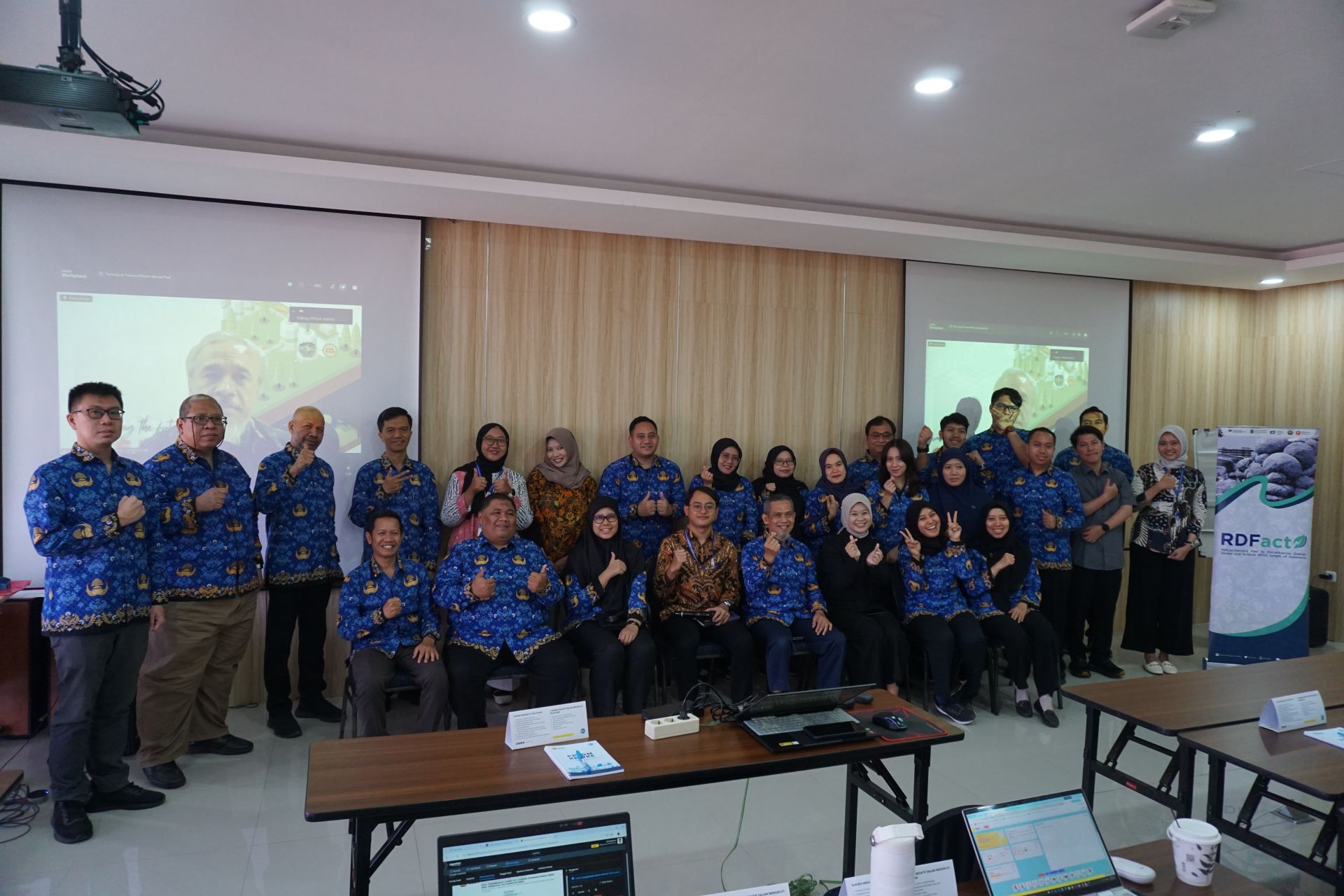 RDFact ToT participants and facilitators during the group photo session
To support this effort, Resilience Development Initiative (RDI) and Baresi Training Center, through the RDFact program, organized a three-day Training of Trainers (ToT) on Refuse-Derived Fuel (RDF) in collaboration with the Human Resources Development Center for Electricity, New, Renewable Energy and Energy Conservation (PPSDM EBTKE), Ministry of Energy and Mineral Resources (MEMR), from 17–19 June 2026. The training was designed to provide comprehensive knowledge transfer for prospective trainers from PPSDM EBTKE, covering the entire RDF ecosystem, from technical aspects and risk assessment to economic analysis, business design, monitoring and evaluation, and socio-economic impact assessment.
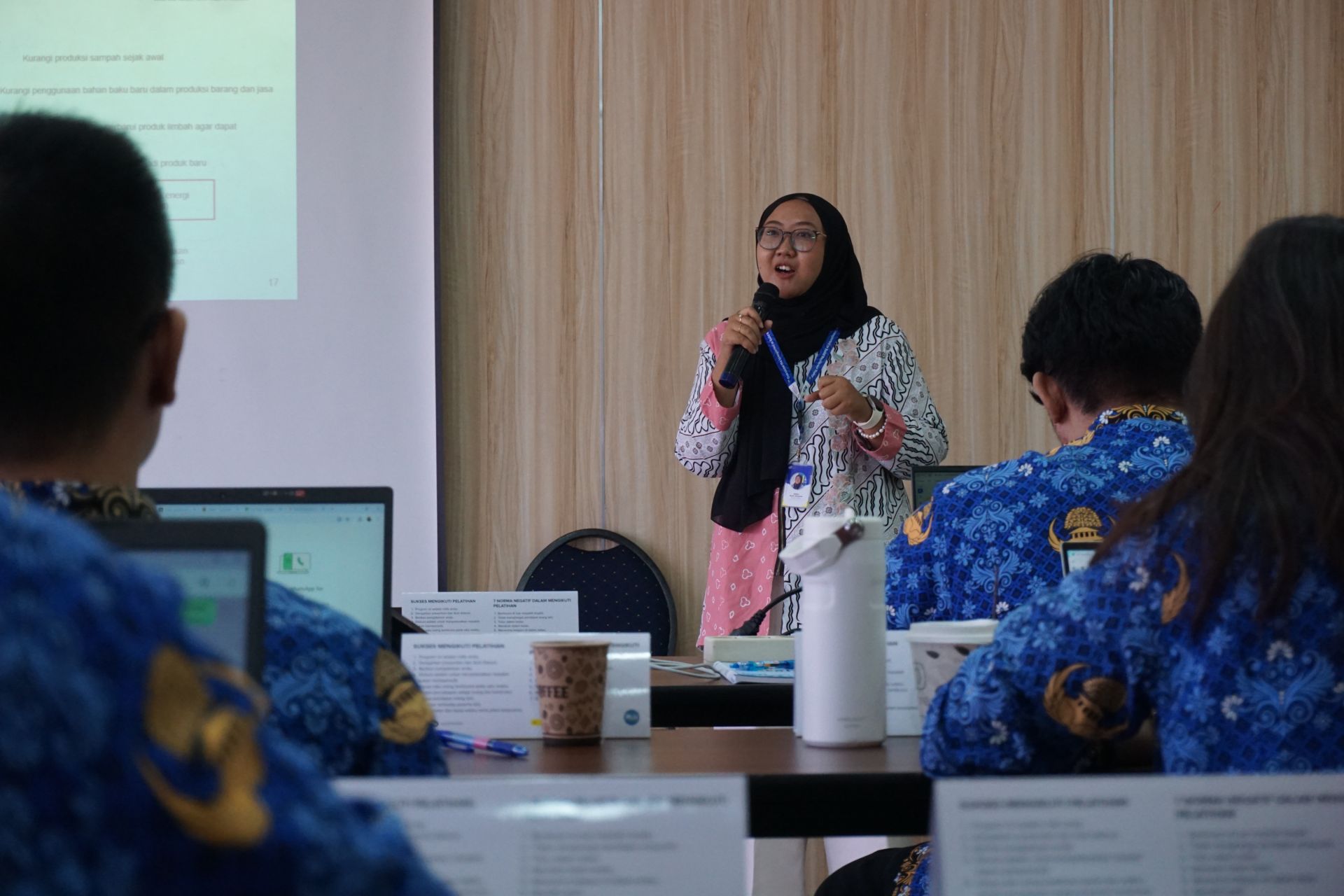 Nidha Resti Aisyarah (WWM Research Officer, RDI) delivered a comprehensive introduction to RDF.
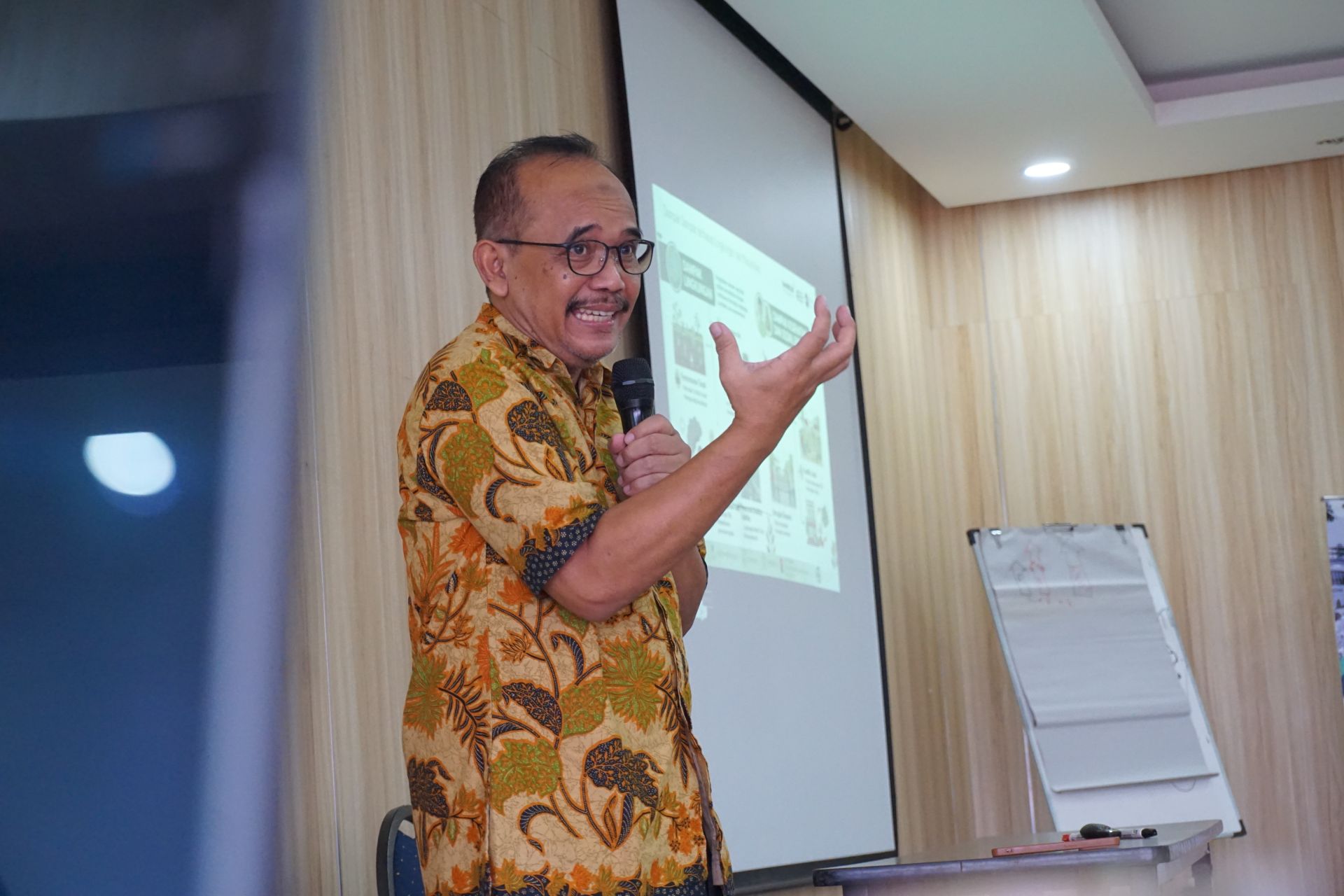 Ir. Wiharja (Research Center for Environmental Technology and Clean Technology, BRIN) shared insights on RDF technologies, technology selection, and risk identification and mitigation strategies for RDF projects.
The first day of the training was officially opened by Ir. Edi Wibowo, M.T., Head of PPSDM EBTKE; Noor Arifin Muhammad, S.T., M.SIE., Director of Bioenergy at the Directorate General of New, Renewable Energy and Energy Conservation, Ministry of Energy and Mineral Resources; and Baihaqi Muhammad, REER Programme Officer at RDI. Following the opening session, Nidha Resti Aisyarah, WWM Research Officer at RDI, delivered a comprehensive introduction to RDF, covering waste management practices, circular economy concepts in Indonesia, waste-to-energy initiatives, and RDF fundamentals. The afternoon session featured Ir. Wiharja from the Research Center for Environmental Technology and Clean Technology, BRIN, who shared insights on RDF technologies, technology selection, and risk identification and mitigation strategies for RDF projects.
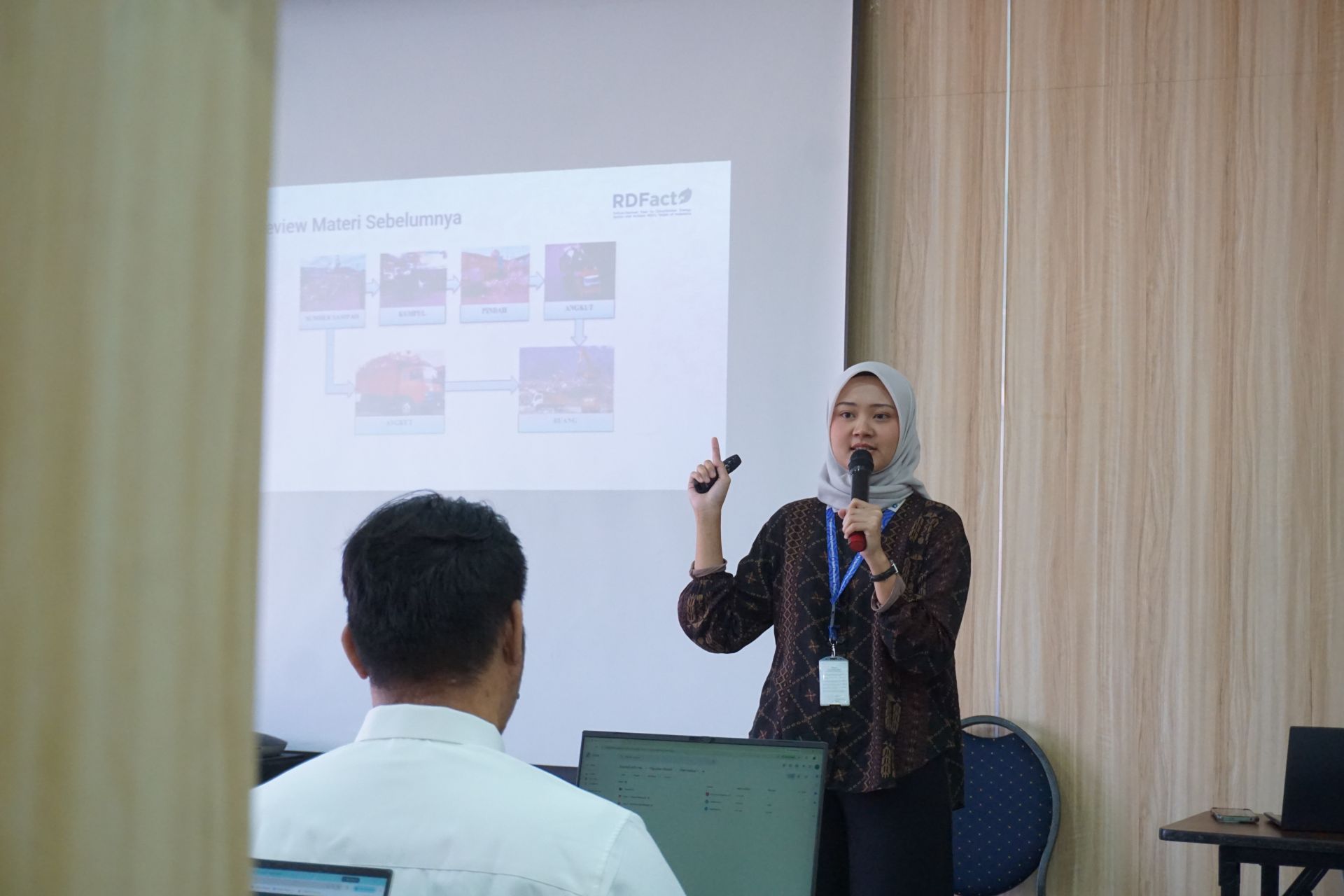 Rr. Widiartyasari Prihatdini facilitated a session on RDF's Techno-Economic Assessment (TEA)
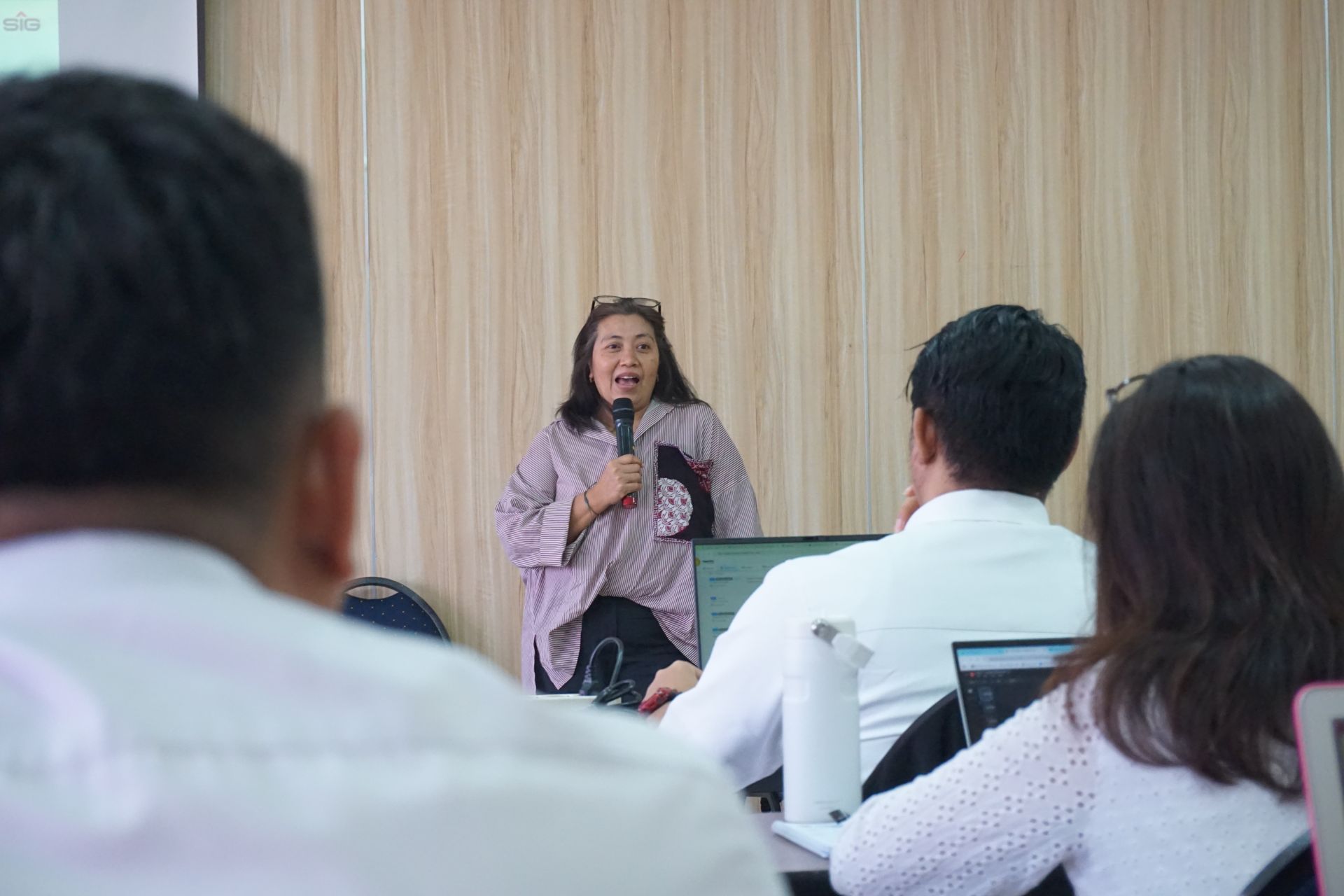 Presentation on RDF Business Design by Mrs. Ita Sadono
Building upon the foundational knowledge from the first day, the second day focused on the techno-economic and business dimensions of RDF projects. Rr. Widiartyasari Prihatdini, REER Research Officer at RDI, facilitated a session on Techno-Economic Assessment (TEA), introducing participants to economic evaluation methods, investment analysis, and socio-economic impacts associated with RDF implementation. In the afternoon, Ita Sadono, MSW RDF Expert from PT Semen Indonesia Group (SIG), shared valuable industry perspectives on RDF business models and financing schemes, drawing from her extensive professional experience in the field.
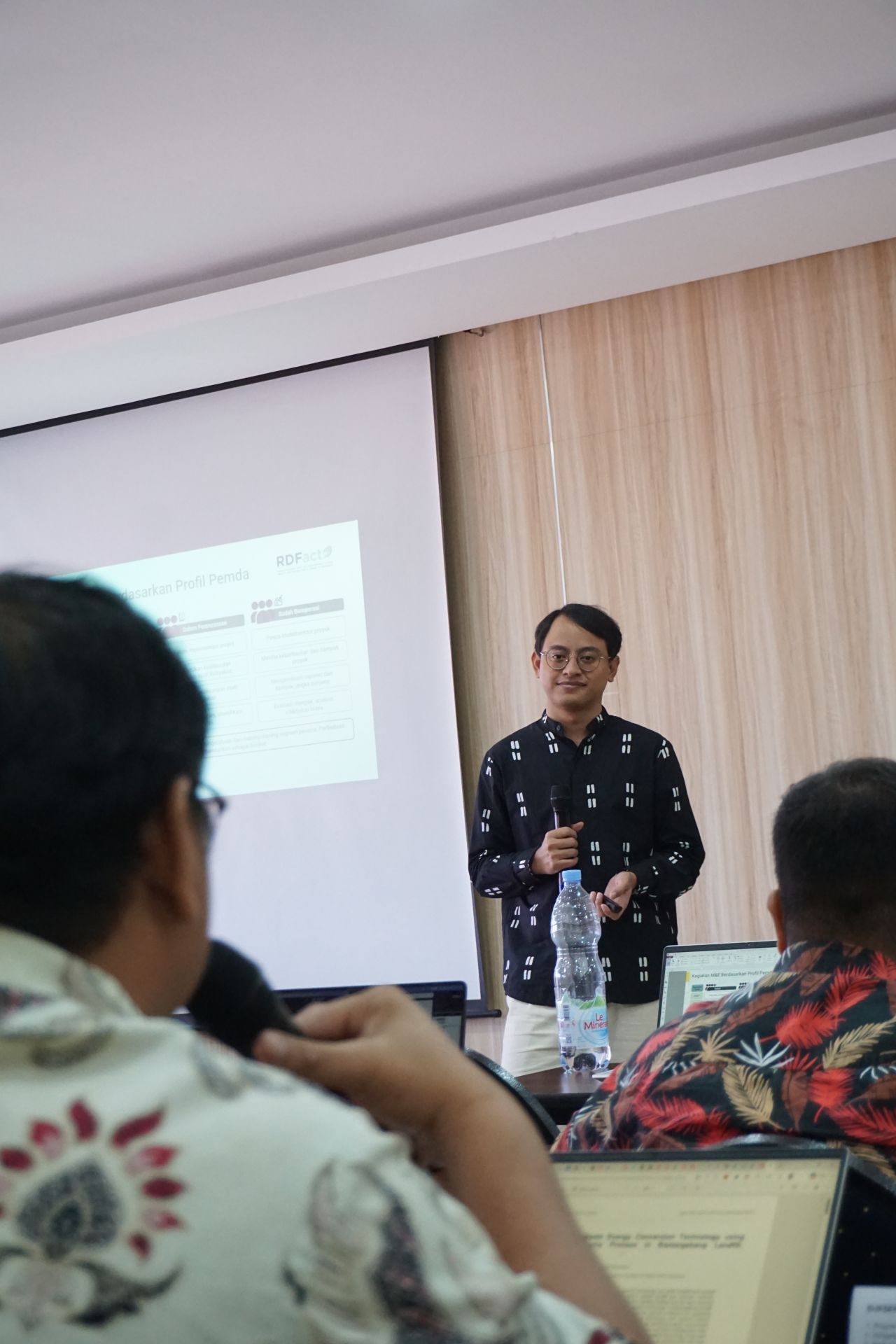 Discussion between participants & Baihaqi Muhammad (REER Programme Officer, RDI) on RDF Monitoring & Evaluation Session.
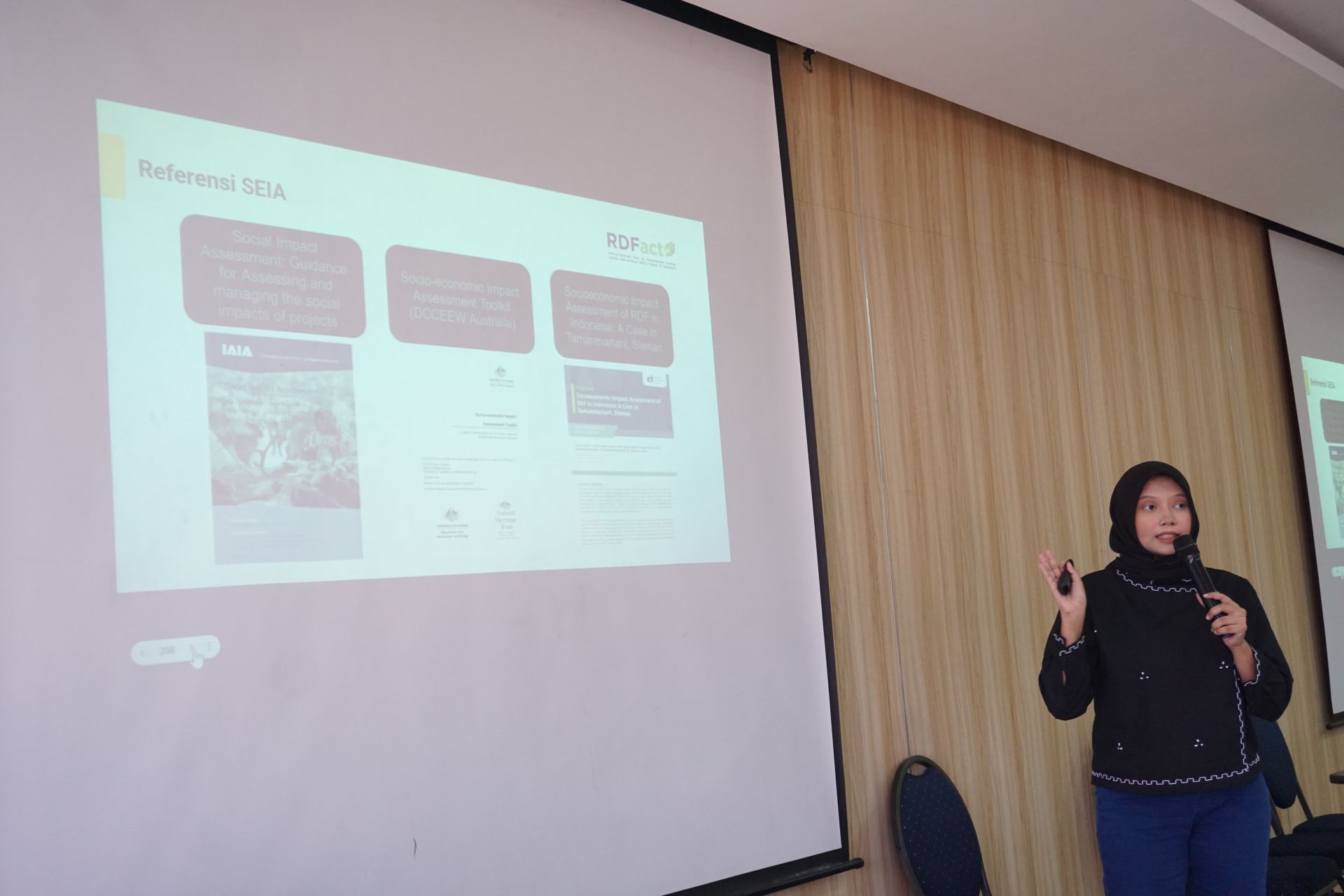 Almira Hanifa(REER Research Officer, RDI) delivered session on RDF's Social Economy Impact Assessment (SEIA) methodologies.
The third day concentrated on project sustainability and impact assessment. The sessions were introduced by Najla Devanza, Project Support Officer of REER-RDI, who outlined the day's agenda. Baihaqi Muhammad then led the Monitoring and Evaluation (M&E) session, guiding participants through M&E frameworks, indicators, reporting mechanisms, and practical tools for RDF project monitoring. The final technical session was delivered by Almira Hanifa, Research Officer at REER-RDI, who introduced participants to Social Economy Impact Assessment (SEIA) methodologies. Her presentation explored direct and indirect socio-economic impacts of RDF projects, mitigation and management measures, and the Indonesian regulatory context from the perspective of the Ministry of Public Works.
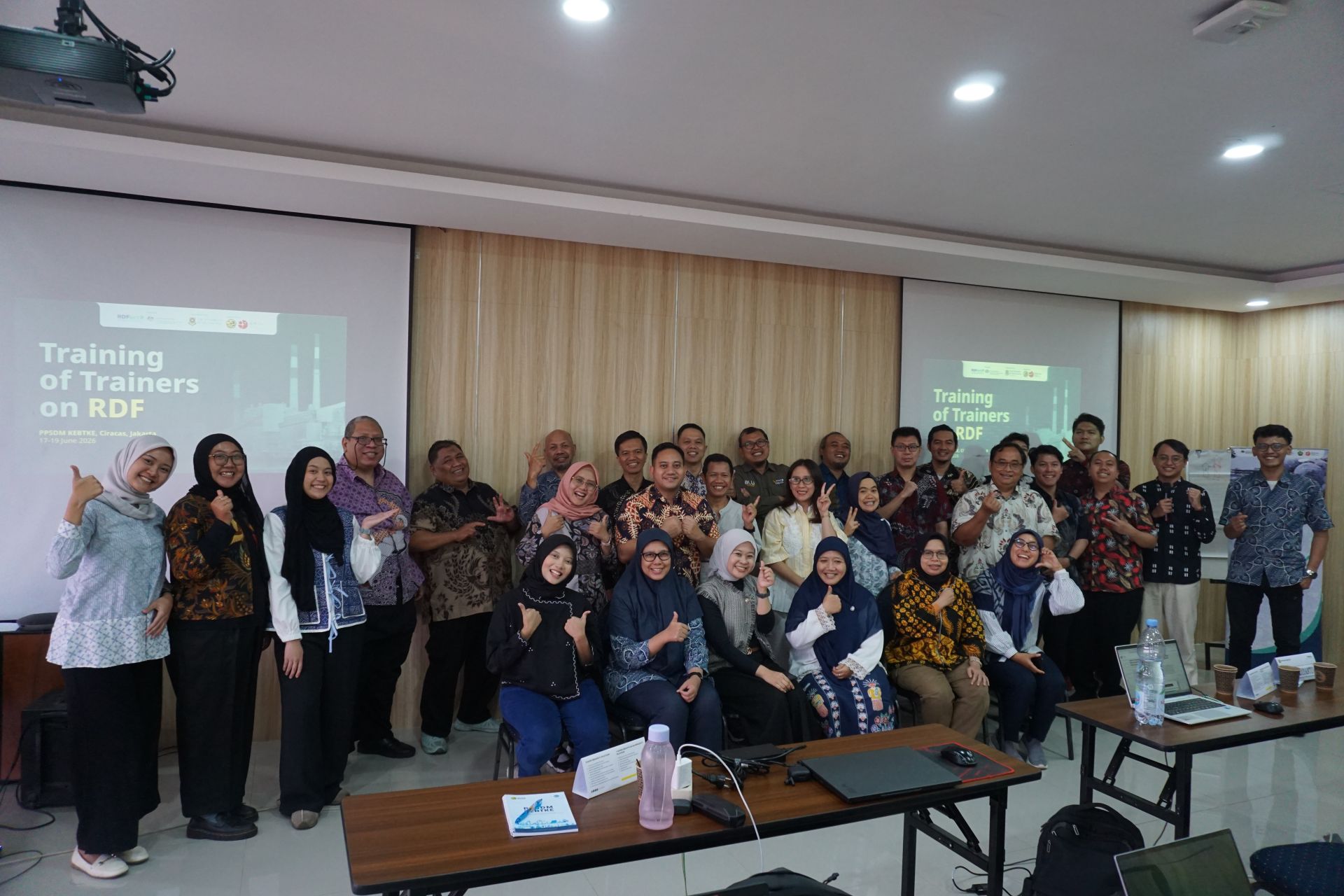 RDFact ToT participants and facilitators phot after closing event
Throughout the three-day training, participants actively engaged in discussions, questions, and knowledge exchange sessions, reflecting the strong interest and commitment of PPSDM EBTKE and the Ministry of Energy and Mineral Resources in advancing RDF capacity development. The program concluded with closing remarks from Baihaqi Muhammad (REER Programme Officer, RDI), Unsaini Sabrina Taqfir from the Directorate of Bioenergy, Ministry of Energy and Mineral Resources, and Elin Lindiasari, Coordinator of Facilities, Infrastructure, and Human Resources Development at PPSDM EBTKE.
Through this Training of Trainers on RDF with PPSDM EBTKE and the Ministry of Energy and Mineral Resources, Resilience Development Initiative (RDI), as a global think tank, reaffirms its commitment to supporting initiatives related to waste-to-energy development, circular economy implementation, and sustainable waste management. We believe that collaboration, knowledge sharing, and capacity building are essential to accelerating Indonesia’s transition toward a cleaner and more sustainable future. Let's collaborate!