Enhancing Technology Transfer in Cambodia’s Dry Food MSME Ecosystem
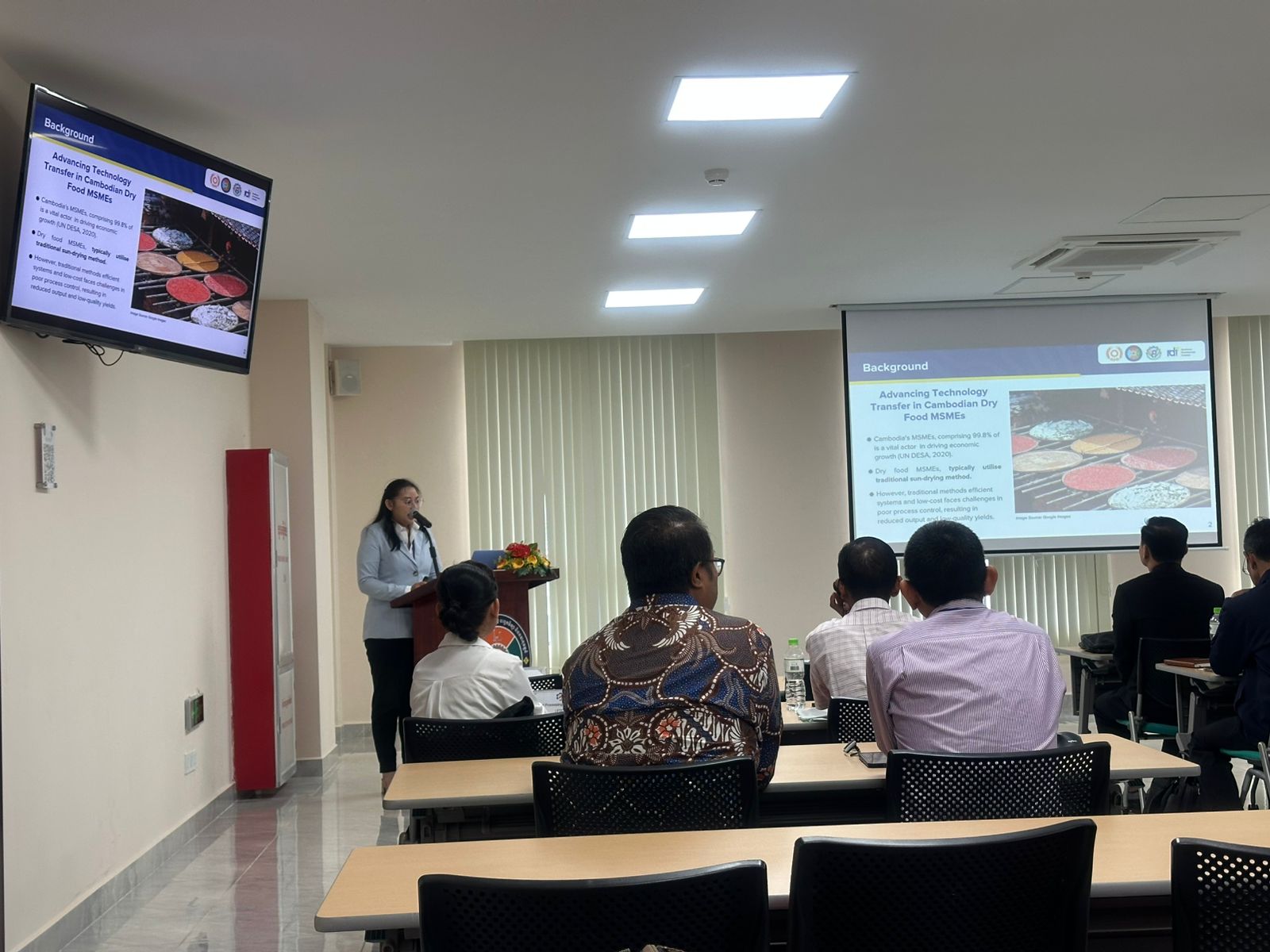
Chelsea Patricia (RDI Knowledge and Academic Coordinator) presented initial findings from the project “Enhancing Technology Transfer in the Dry Food MSME Sector in Cambodia.”
Micro, Small, and Medium Enterprises (MSMEs) in Cambodia’s dry food sector play a vital role in ensuring food security, supporting local consumption, and contributing to export growth. Although the Cambodian government has introduced several support policies, such as the National Agricultural Development Plan and the Industrial Development Policy, technology transfer between research institutions and MSMEs remains limited, and gaps persist in enabling innovation adoption at scale.
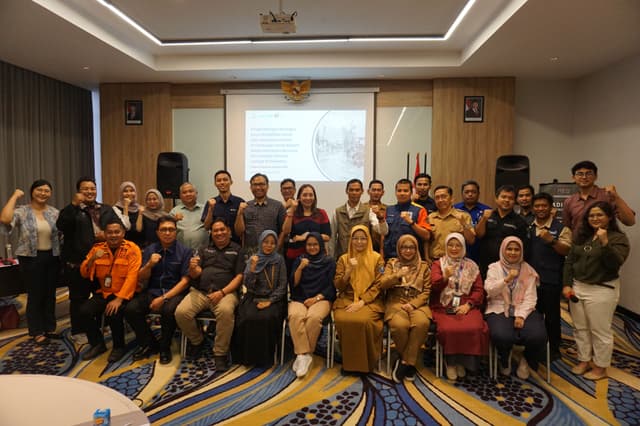
Against this backdrop, on 30 October 2025, Chelsea Patricia (RDI Knowledge and Academic Coordinator) conducted a Focus Group Discussion (FGD) at Cambodia’s Ministry of Industry, Science, Technology, and Innovation (MISTI) to present initial findings from the project “Enhancing Technology Transfer in the Dry Food MSME Sector in Cambodia.” The project is implemented in collaboration with the Asian Productivity Organization (APO), the Department of Technology Transfer (DTTR), and the National Productivity Centre of Cambodia (NPCC). The discussion brought together representatives from key ministries, the Cambodia Packaging Centre, and universities to exchange insights on challenges and opportunities within the dry food MSME ecosystem. Despite MSMEs accounting for 99.8% of businesses in Cambodia and playing a critical role in economic growth, many dry food producers continue to struggle to modernise due to limited technical capacity and access to resources.
The FGD highlighted significant gaps in knowledge, infrastructure, and quality control across the sector. Most producers still rely on traditional processing methods, lack proper hygiene practices and standard operating procedures (SOPs), and face high spoilage rates due to inadequate pre- and post-harvest infrastructure. Stakeholders agreed that improvements must prioritise better processing control and packaging. While improved processing practices are essential to ensure food safety and market readiness, inadequate packaging and storage systems remain major barriers, often undermining otherwise well-processed products through contamination risks and short shelf life.
Looking ahead, participants emphasised the need for coordinated action over the next 5-10 years. This includes strengthening the technical capacity of MSME owners, improving access to appropriate technologies and packaging solutions, and expanding government support beyond financial assistance—such as tariff reductions on machinery imports. Establishing a clear legal and institutional framework for technology transfer, supported by stronger collaboration between government, universities, and the private sector, will be essential to enable dry food MSMEs to transition from traditional production methods to competitive, market-ready enterprises capable of accessing high-value domestic and export markets.
The study aims to assess the status and readiness of technology transfer in Cambodia’s dry food MSME sector and to provide actionable strategies to enhance productivity and competitiveness. It evaluates the technological capacity of research institutions and universities, identifies key barriers and opportunities for collaboration with MSMEs, facilitates multi-stakeholder knowledge exchange through FGDs, workshops, site visits, and case studies, and proposes a roadmap for scaling up technology transfer and innovation adoption. In addition, the study analyses regional dry food market trends across ASEAN and develops targeted recommendations to improve productivity, operational efficiency, and market reach, with a focus on Cambodia’s dry food MSME sector.