Media Spotlight: RDI Responding to the 2025 Sumatra Floods
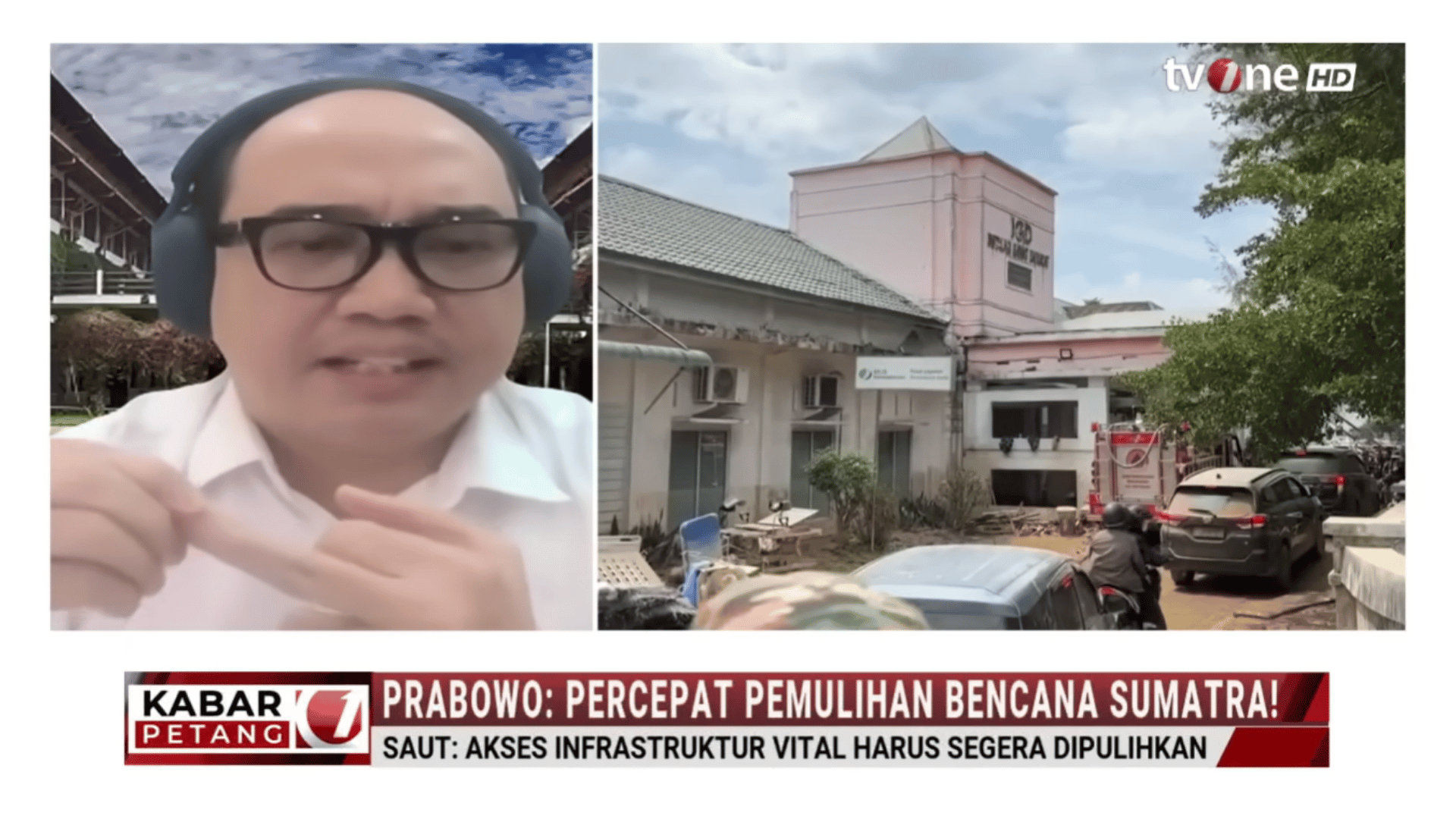
"Dr. Saut Sagala, Senior Research Fellow at the Resilience Development Initiative (RDI) on Apa Kabar Indonesia Malam tvOne (29/12/2025)."
Dr. Saut Sagala, Senior Research Fellow at the Resilience Development Initiative (RDI) and Program Director of the Master’s and Doctoral Programs in Regional and City Planning & Transportation at the Bandung Institute of Technology (ITB), served as a disaster management expert and key media resource person during national media coverage of the 2025 Sumatra floods.
Across various platforms, including Metro TV and tvOne, Dr. Sagala provided expert insights on disaster risk management in the context of escalating climate-related hazards. His commentary consistently highlighted the importance of sustainable disaster resilience funding, the strategic role of Indonesia’s Disaster Pooling Fund, and the need for an integrated, long-term approach to disaster preparedness, response, and recovery, particularly as extreme weather events intensify across Sumatra.
One of these perspectives was shared during his appearance on Apa Kabar Indonesia Malam (tvOne), where Dr. Sagala discussed the growing climate crisis in Sumatra following the impacts of Tropical Cyclone Senyar. He explained that extreme weather events in the region are increasingly driven by climate change and often trigger cascading risks that extend beyond immediate flooding.
In the discussion, Dr. Sagala emphasized that disaster risk must be understood through two interconnected lenses, which are hazard mitigation and community adaptation. While weather modification is often considered a rapid response to extreme rainfall, he noted that such measures only address the hazard itself. Equally critical is strengthening the capacity of communities to anticipate, respond to, and adapt to changing risk conditions through dynamic risk mapping, spatial analysis, and timely access to information.
He further underlined that disaster risk is not static. As demonstrated during Tropical Cyclone Senyar, shifts in hazard intensity can rapidly alter risk levels, making continuous monitoring and forward-looking risk assessments essential, not only to manage current impacts, but also to anticipate future threats.