Advancing Scalable RDF Pathways for Low-Carbon Cities in Indonesia
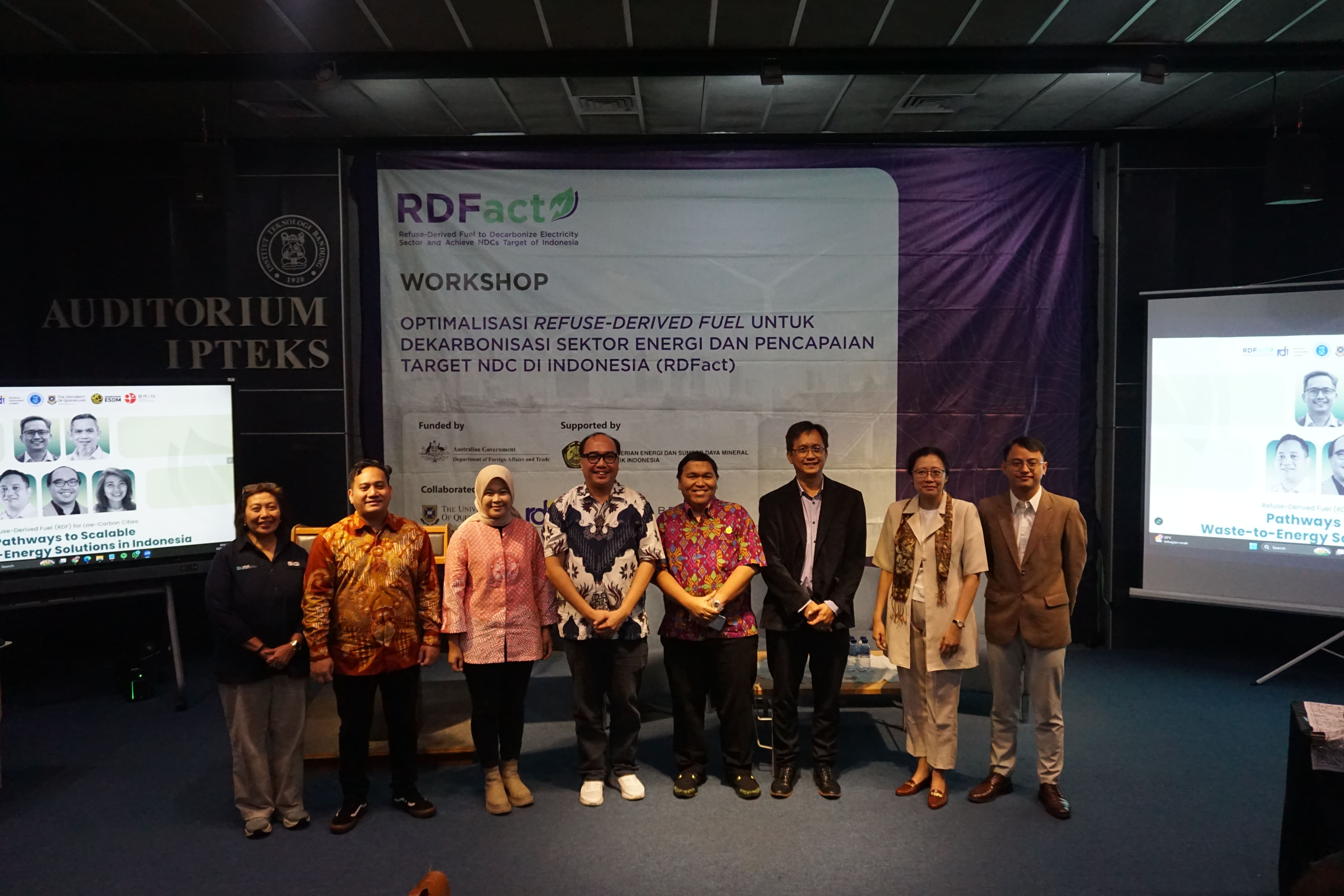 Stakeholder and Panelist at the Seminar “Refuse-Derived Fuel (RDF) for Low-Carbon Cities: Pathways to Scalable Waste-to-Energy Solutions in Indonesia
Indonesia’s urban areas continue to face significant waste management challenges as increasing population growth and consumption place greater pressure on existing landfill-based systems. Refuse-Derived Fuel (RDF) has emerged as a strategic Waste-to-Energy (WtE) solution that not only reduces landfill burden but also supports national decarbonization efforts and the transition toward low-carbon cities. The release of Presidential Regulation No. 109/2025 reflects Indonesia’s strengthened commitment to accelerating WtE implementation, underscoring the importance of capacity building, policy alignment, and cross-sector collaboration.
To support this direction, the Resilience Development Initiative (RDI), in partnership with The University of Queensland (UQ), BRIN, the Ministry of Energy and Mineral Resources (ESDM), and Australia’s DCCEEW, held the seminar “Refuse-Derived Fuel (RDF) for Low-Carbon Cities: Pathways to Scalable Waste-to-Energy Solutions in Indonesia” on 10 December 2025 at the ITB Campus Center East Auditorium in Bandung. Opening remarks were delivered by Dr. Anthony Halog (Lecturer, School of the Environment, UQ; Principal Investigator of RDFact) and Dr. Saut Sagala (Program Director of Master & Doctoral Programme of Regional and Urban Planning and Transportation Planning ITB; RDI Senior Research Fellow).
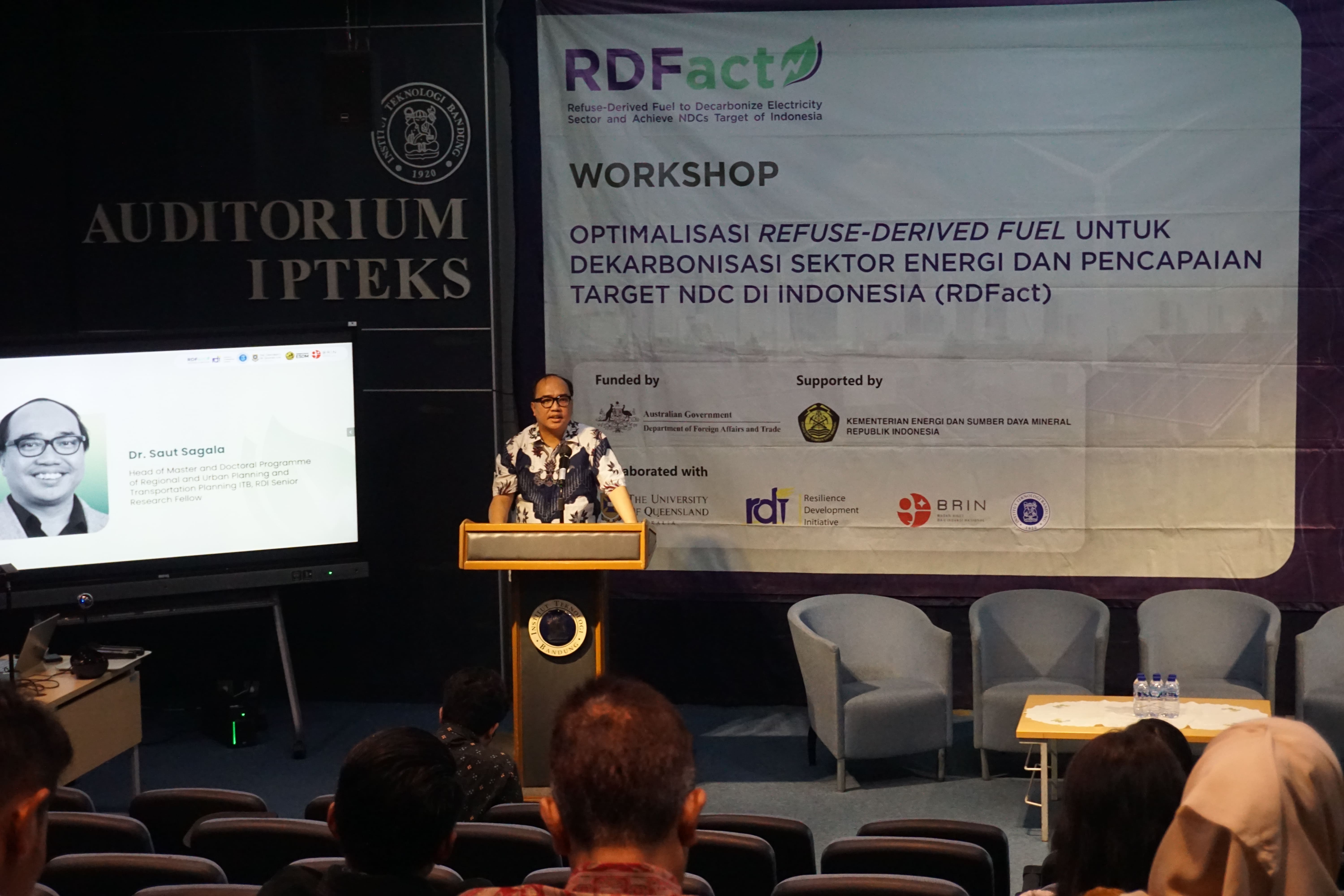
Opening Remarks from Dr. Saut Sagala (Program Director of Master and Doctoral Programme of Regional and Urban Planning and Transportation Planning ITB, RDI Senior Research Fellow)
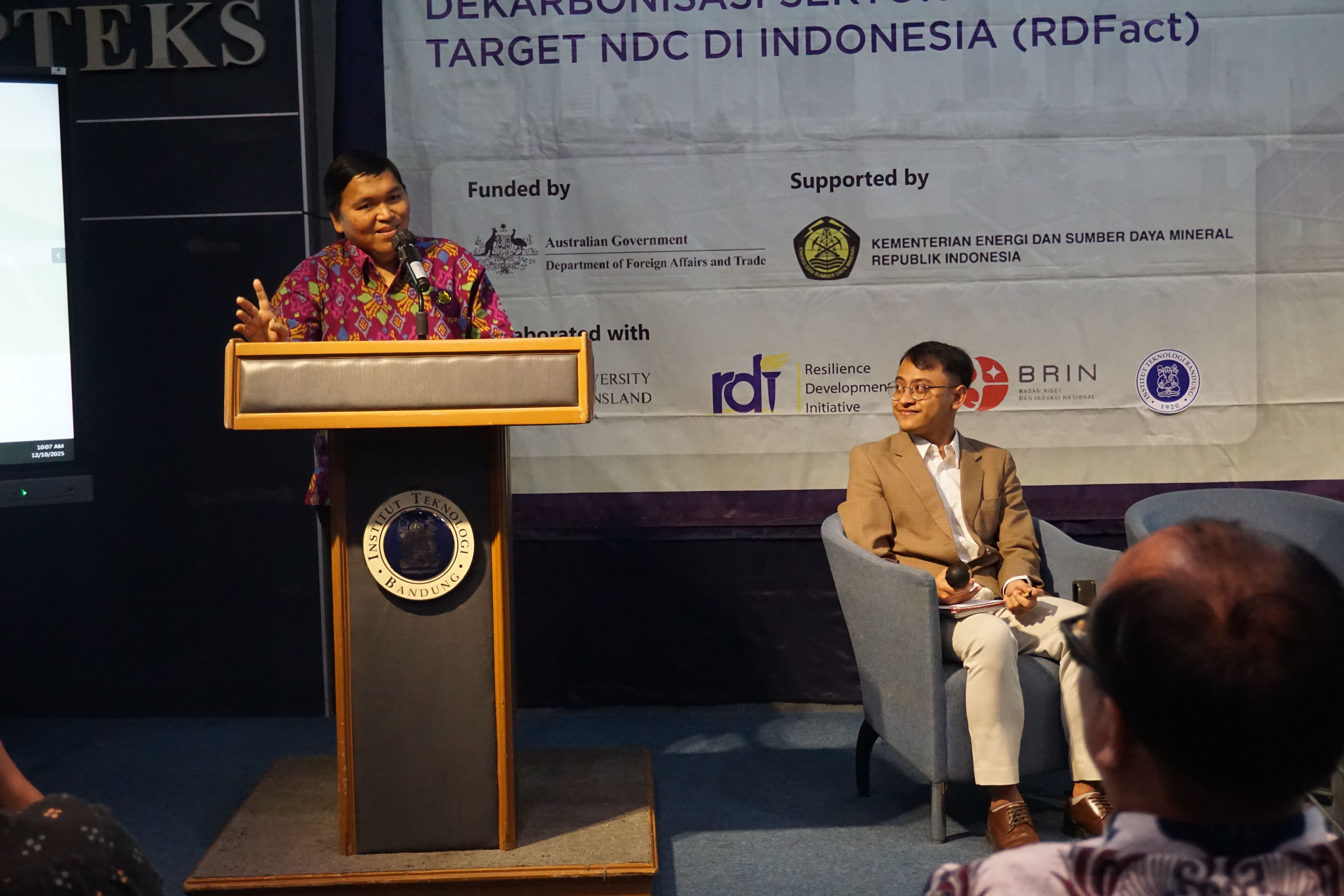
Opening Remarks from Trois Dilisusendi, S.T., M.E.(Head of the National Center for Power Survey & Testing, Renewable Energy, and Energy Conservation)
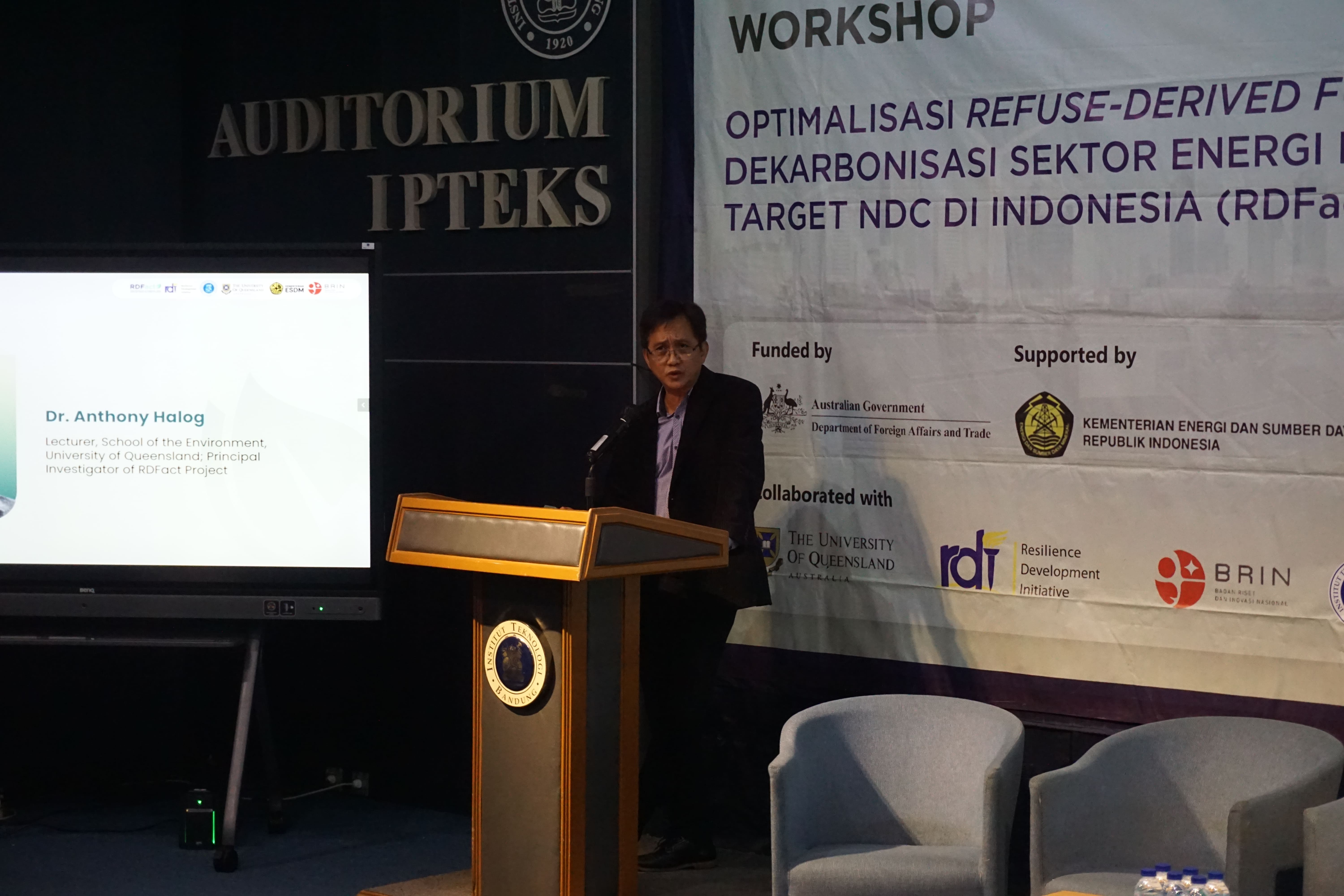
Opening Remarks from Dr. Anthony Halog (Lecturer, School of the Environment, University of Queensland; Principal Investigator of RDFact Project)
A panel session followed, featuring Pradipta Andaru (Sub-Coordinator of Bioenergy Investment, ESDM), Dr. Saut Sagala (ITB/RDI), and Ita Sadono (MSW RDF Expert, PT Semen Indonesia Group). The discussion highlighted the national agenda for expanding Indonesia’s WtE portfolio, the importance of circular economy principles in strengthening low-carbon urban development, industry needs related to feedstock quality and tipping fee mechanisms, and the need for coherent cross-ministerial coordination. Panelists emphasized that scaling RDF requires appropriate technology selection, improved waste segregation practices, stronger local government capacity, and blended financing arrangements.
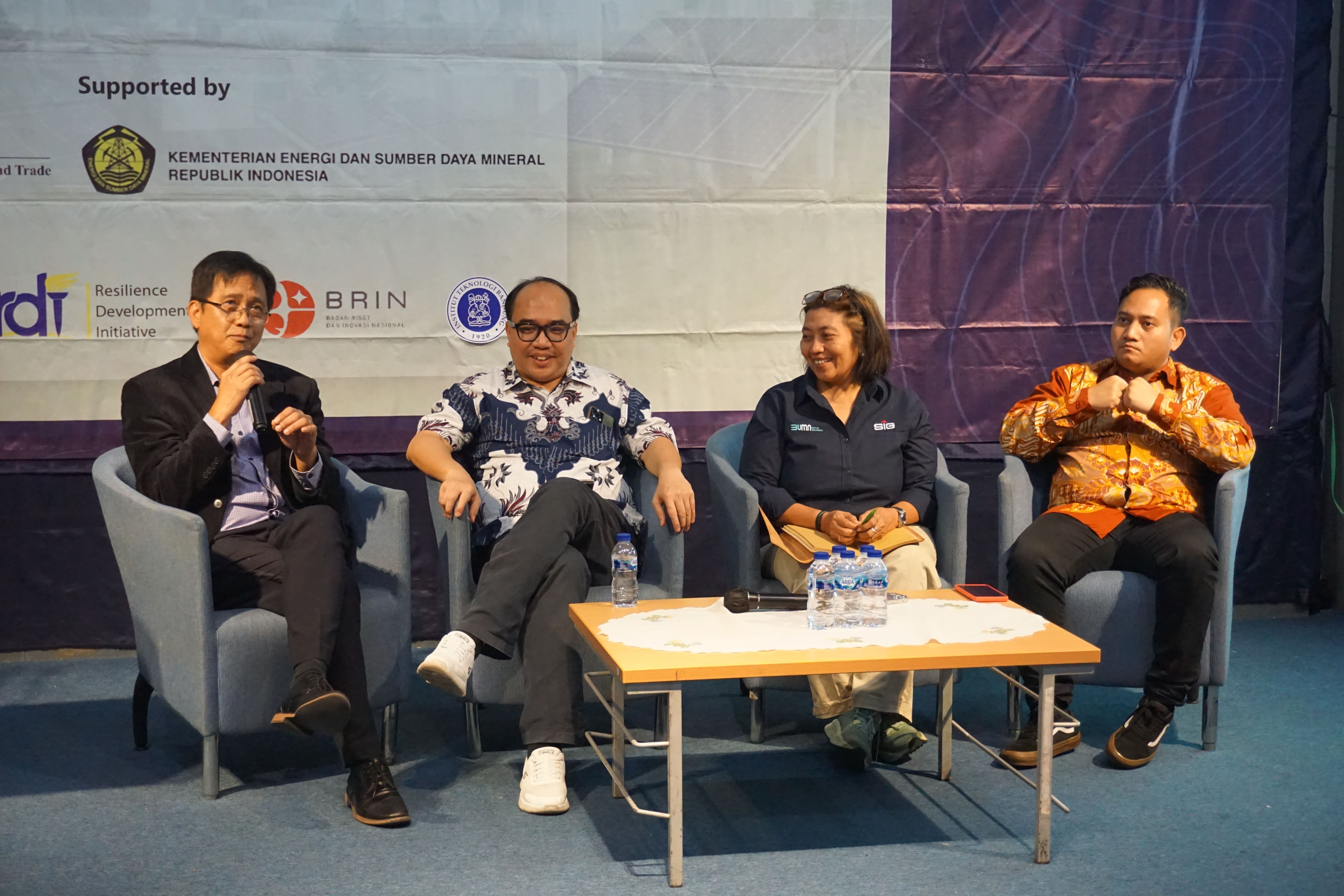
Sesi Panel Seminar "Refuse-Derived Fuel (RDF) for Low-Carbon Cities: Pathways to Scalable Waste-to-Energy Solutions in Indonesia"
After the panel session, the RDFact Project Recap was presented by Baihaqi Muhammad (REER Programme Officer), Artyasari Prihatdini (REER Research Officer), and Almira Hanifa (CEGF Research Officer). The recap synthesized four major study findings: (1) socioeconomic impact assessment of RDF in Tamanmartani, Sleman; (2) financing scheme and cost-benefit analysis for RDF implementation; (3) analysis of Indonesia’s RDF policy landscape and strategic recommendations; and (4) feasibility assessment supported by the development of monitoring and evaluation methods. Key recommendations emphasized the importance of empowering local communities to maintain acceptance of RDF facilities, responding promptly to community concerns, and ensuring that BUMD, local governments, sub-district authorities, and community groups share a unified vision for operationalizing TPST and RDF systems.
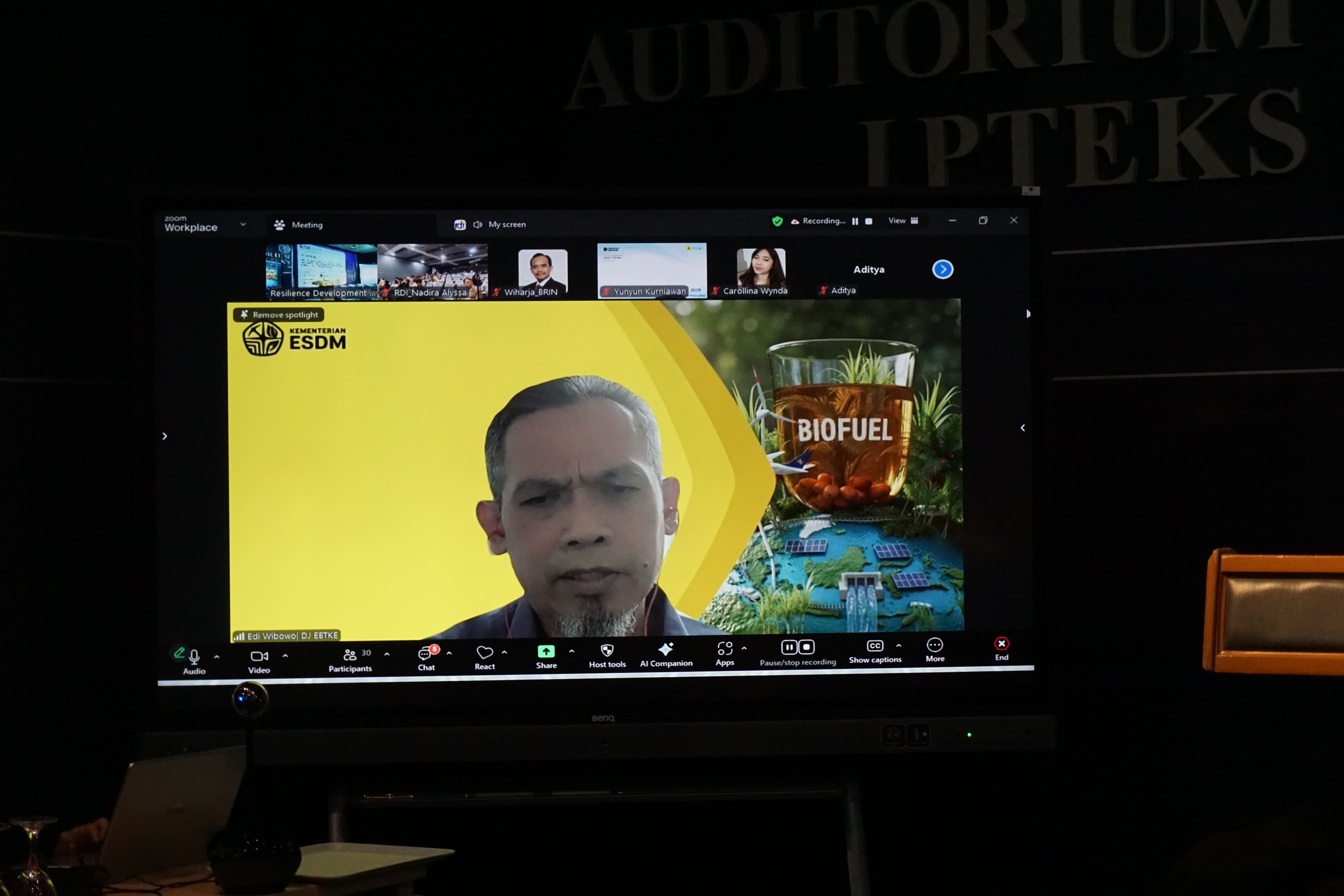
Closing Remarks from Ir. Edi Wibowo, M.T. (Director of Bioenergy, Ministry of Energy & Mineral Resources)
The event concluded with closing remarks from Ir. Edi Wibowo, M.T. (Director of Bioenergy, Ministry of Energy and Mineral Resources), who highlighted the significant contributions of the RDFact project in advancing policy experimentation, technical capacity, and evidence-based insights for WtE development. RDI reiterated its commitment to supporting Indonesia’s Waste-to-Energy initiatives as part of the nation’s broader efforts to address waste challenges and accelerate a low-carbon, circular energy transition.