Science to Action: UK–Indonesia Symposium on Geohazard Science
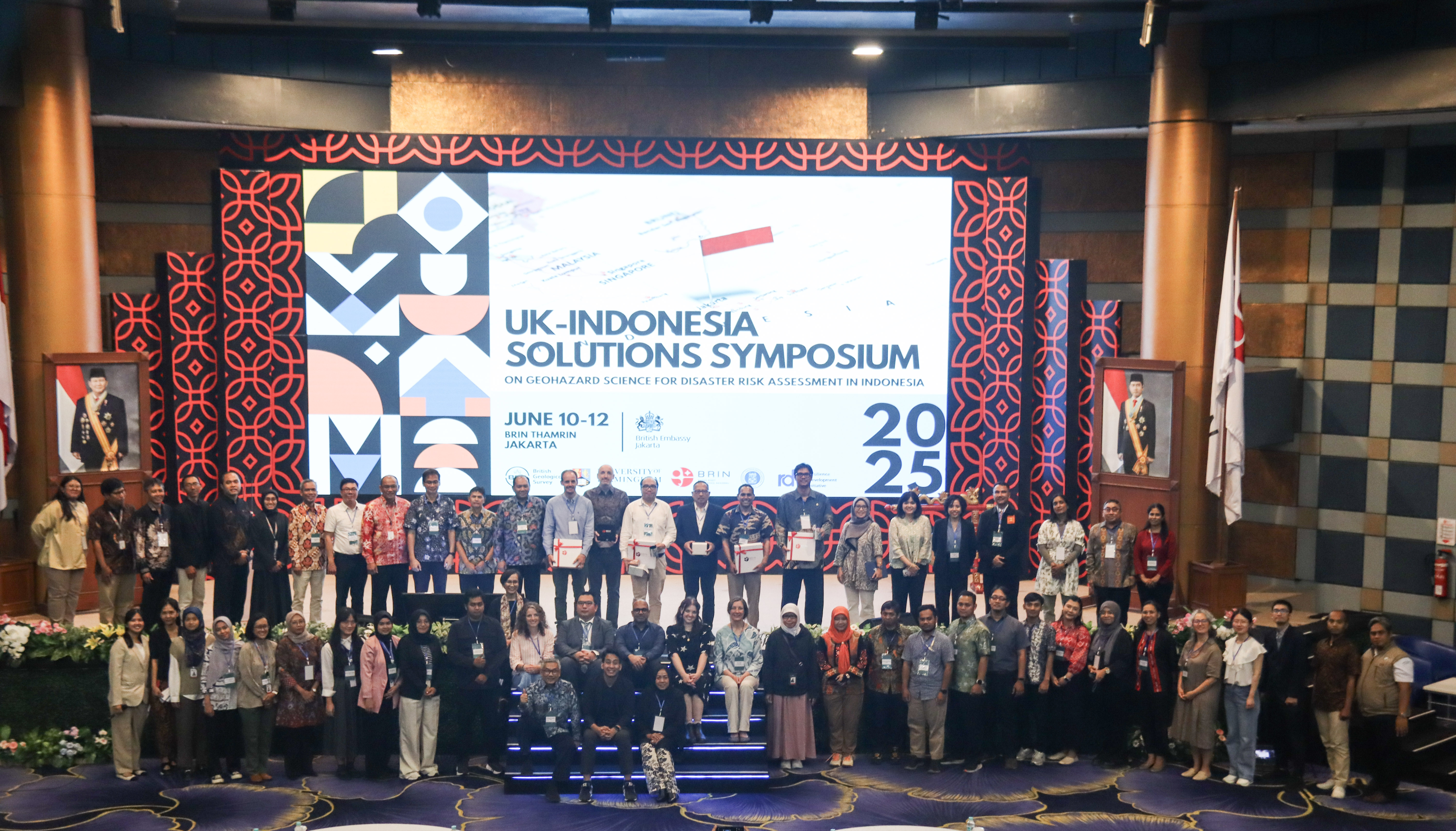
Participants of the UK–Indonesia Solutions Symposium on Geohazard Science for Disaster Risk Assessment in Indonesia
Indonesia, located along the Pacific Ring of Fire with over 130 active volcanoes and frequent earthquakes, recorded more than 3,000 disasters in 2023, with 98% being floods, landslides, and extreme weather. Rapid urbanisation and climate change are increasing the urgency for stronger disaster risk management (BNPB, 2023).
On June 10-12, 2025, the UK-Indonesia Symposium on Geohazard Solutions took place as a collaborative effort between institutions from both countries. The event was jointly organised by the British Geological Survey, the Resilience Development Initiative (RDI), the National Research and Innovation Agency (BRIN), Institut Teknologi Bandung (ITB), with support from the UK Foreign, Commonwealth and Development Office (FCDO) Science and Technology Network and the British Embassy in Indonesia. This symposium marked an ongoing commitment to collaborative research and dialogue addressing Indonesia’s geohazard challenges.
The three-day symposium brought together researchers from diverse institutions and levels. Participants included academics from top Indonesian universities such as ITB, Universitas Gadjah Mada, Universitas Padjadjaran, Universitas Indonesia, and Institut Teknologi Sumatera (ITERA), as well as UK universities including University College London, University of Bath, University of Edinburgh, and University of Birmingham. Representatives from key Indonesian stakeholders in the disaster management sector, such as the Indonesian Meteorological, Climatology, and Geophysics Agency (Badan Meterologi, Klimatologi, dan Geofisika/BMKG), the Geospatial Information Agency (Badan Informasi Geospasial/BIG), MAIPARK, and the Volcanological Survey of Indonesia (Pusat Vulkanologi dan Mitigasi Bencana Geologi/PVMBG), also contributed valuable perspectives.
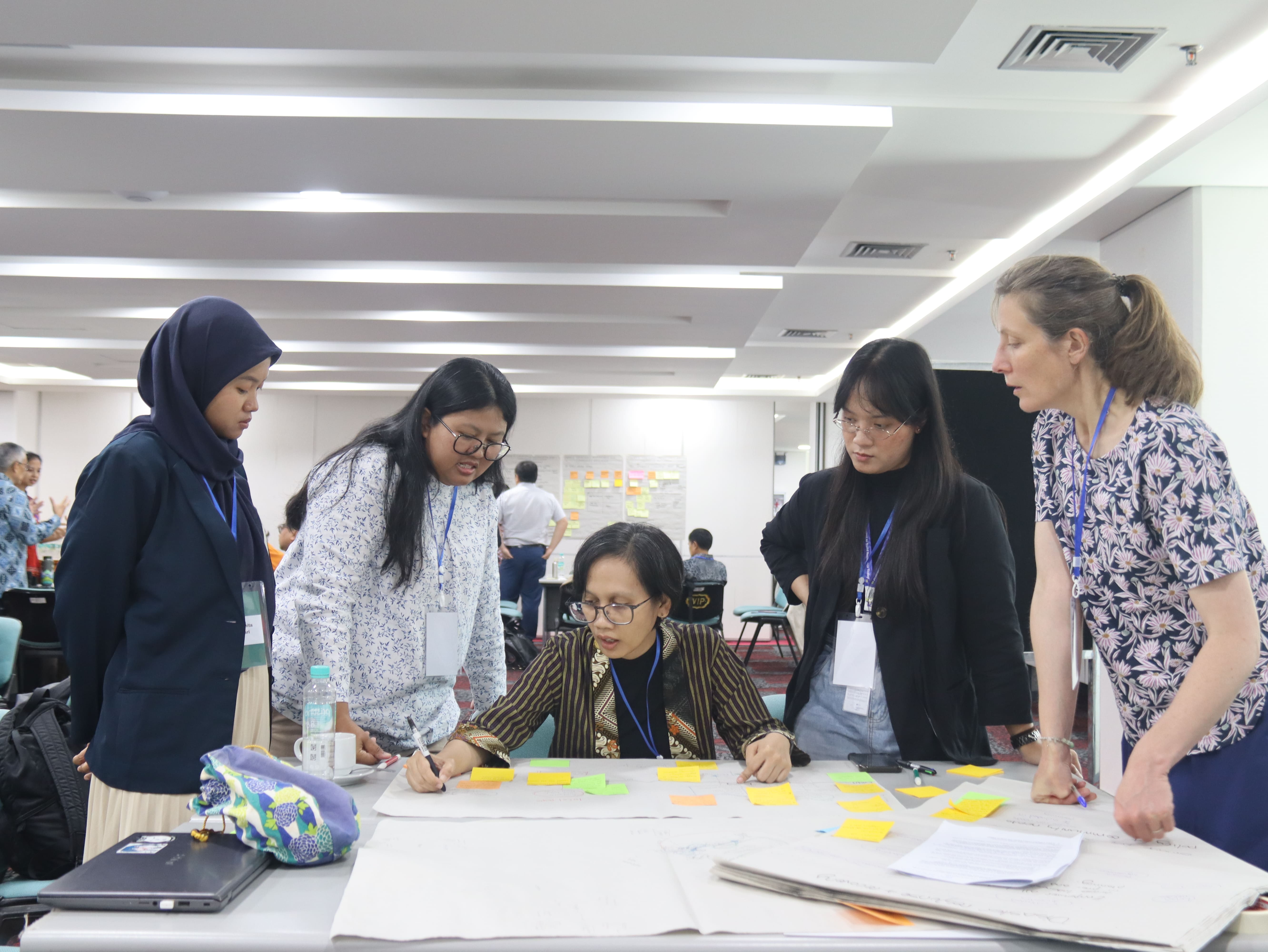
Symposium participants discussing and identifying problem statements in one of the breakout group sessions
The symposium aimed to build a roadmap for geohazard research that supports long-term disaster risk solutions in Indonesia. Discussions were structured around four main themes: hazard assessment and warning systems, dynamic risk and adaptation, emergency preparedness and response, and disaster recovery. Using a mix of keynote presentations, panel discussions, breakout sessions, and a co-design process, the event fostered rich dialogue. It opened up further collaboration opportunities, particularly in relation to the International Science Partnerships Fund (ISPF) research programs under the British Council. RDI consistently emphasises the importance of sustaining concrete collaborations with all stakeholders, particularly UK-Indonesia institutions, in order to strengthen resilience in Indonesia.
Written by Fahmi Akbar (Outreach Officer)