Strengthening Community Capacity for a Just Energy Transition in Probolinggo and West Lombok
 As part of efforts to support Indonesia’s Just Energy Transition Partnership (JETP), a capacity-building program was implemented under the Global Accelerator Multi-Partner Trust Fund Adaptive Social Protection Program. This program was supported by the United Nations Development Programme (UNDP) Indonesia, in coordination with the Ministry of National Development Planning (Kementerian PPN/Bappenas) and relevant national and sub-national government partners, and implemented by the Resilience Development Initiative (RDI). The programme was conducted in Probolinggo Regency, East Java, and West Lombok Regency, West Nusa Tenggara, to strengthen community and institutional capacity for inclusive biomass development. The two pilot locations were linked to PLTU Paiton in Probolinggo and PLTU Jeranjang in West Lombok.
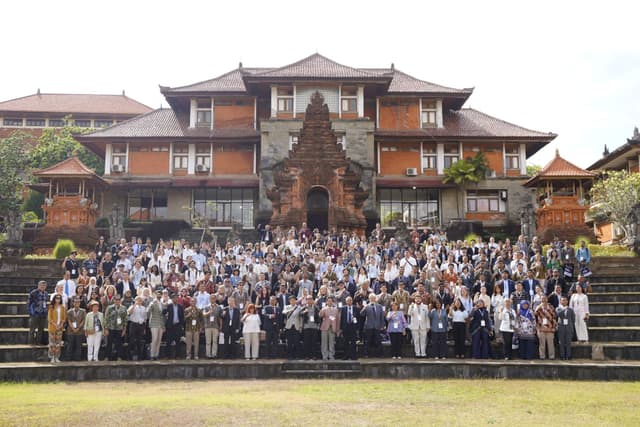
 Held between July and August 2026, the programme brought together local government stakeholders, community representatives, technical facilitators, and other relevant institutions. Stakeholder sessions were conducted on 22-23 July in Probolinggo and 12-13 August in West Lombok, followed by community-level activities on 29-30 July and 23-24 August in Probolinggo, and 14-16 August in West Lombok. The capacity-building sessions were facilitated by an RDI team comprising Eri Krismiyaningsih (Programme Manager), Shafit Dhirgandiny (Training Development Officer), Firdha Laila (WWM Programme Officer), Baihaqi Muhammad (REER Programme Officer), Arif Budi Darmawan (CSWH Programme Officer), Rr. Widiartyasari Prihatdini (REER Research Officer), and Wildan Arkan, (CSWH Research Officer).
 The capacity-building programme introduced participants to biomass potential and value chains, social forestry, community empowerment, and Gender Equality, Disability, and Social Inclusion (GEDSI). A total of 34 stakeholders and 87 community participants joined the activities in Probolinggo, while West Lombok involved 42 stakeholders and 67 community participants. More than half of the community participants came from Deciles 1-4, alongside elderly persons, persons with disabilities, women, female-headed households, and local community champions.
The programme highlighted the potential of locally available biomass to contribute not only to energy transition efforts but also to community-level economic opportunities. At the same time, the activities identified the need for continued support in areas such as biomass quality standards, market access, value-chain participation, institutional coordination, and post-training mentoring.
Overall, the capacity-building programme provided a useful foundation for strengthening community and institutional understanding of biomass utilisation and inclusive community empowerment. However, its longer-term impact will depend on how effectively the knowledge gained is translated into practical initiatives, supported by appropriate institutional mechanisms, market linkages, technical assistance, and continued mentoring.